Heathrow to Stansted is about 41 miles (66 km) in a straight line and roughly 65 miles (105 km) by road. A private car covers it in 75 to 100 minutes in ordinary traffic. There is no direct train — rail needs two changes through central London and takes over two hours. A direct National Express coach runs between the two airports from around £18 and takes 1h45 to 2h30. These are the two most widely separated London airports: Heathrow sits in the far west, Stansted up in Essex to the north-east, with the entire northern arc of the M25 in between.
| Road distance | ~65 miles / 105 km |
| Straight-line distance | ~41 miles / 66 km |
| By car (typical) | 75–100 minutes |
| By car (weekday peak) | 100–130 minutes |
| By direct coach | 1h45–2h30, from ~£18 |
| By train | 2h+, no direct line, 2 changes |
| Route driven | M25 J15 → J27 → M11 J8a |
| Fastest option | Private car / taxi |
| Cheapest option | National Express coach |
Three realistic ways to make this crossing, and a private car isn't automatically the right one — pretending otherwise helps nobody. Here is the honest trade-off between them, including the times another mode genuinely suits you better.
| Mode | Door to door | Rough cost | The catch nobody mentions | Best when |
|---|---|---|---|---|
| Private car / taxi | 75–100 min | Fixed fare, quoted up front | Costs more than a coach seat — but it's the only door-to-door option, and the only one that turns an uncertain chain into a booked, tracked, fixed-price line. | You have a connection to protect, checked bags, a group, or simply no appetite for the ordeal. |
| Coach | 1h45–2h30 | From around £18 pp | Direct, but slow and traffic-bound, with fixed departure slots that rarely line up neatly with a flight, plus hold-luggage limits. | Budget is the single priority, you're travelling solo, and the timetable happens to fit. |
| Train | 2 hours + | Varies by leg and time | No direct line exists: three legs and two changes across central London — Heathrow rail to Paddington, Elizabeth line to Liverpool Street, then the Stansted Express — every one with your bags in tow. | You travel light, solo, off-peak, and genuinely have time to spare. |
↔ Swipe the table sideways on mobile
The short version: the coach is the cheapest way from Heathrow to Stansted. A private car is the fastest and the most reliable. The train is neither, and is the option most likely to go wrong with luggage. Where we'd point you elsewhere: a lone backpacker with a wide-open afternoon and a tight budget will be happiest on the coach, and we'll say so. The moment a real connection, checked bags, or more than one traveller enters the picture, both the maths and the stress swing decisively toward a car.
Understand where these two airports physically sit and the difficulty of the journey stops being a mystery. This isn't a short cross-town skip like Heathrow to Gatwick down the western M25 — it's the long way round the top of London, and the reason every other mode of transport turns it into an ordeal.
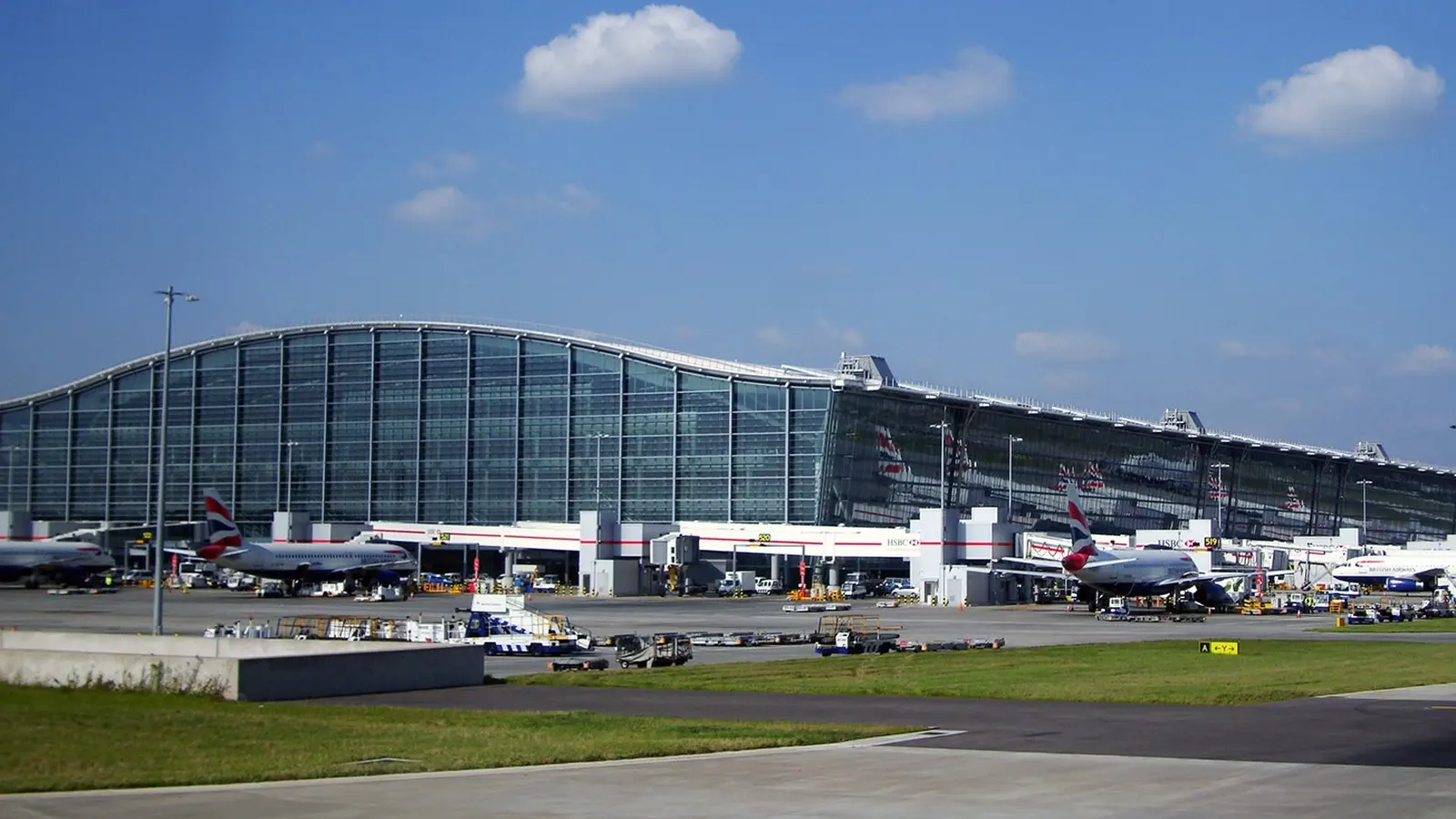
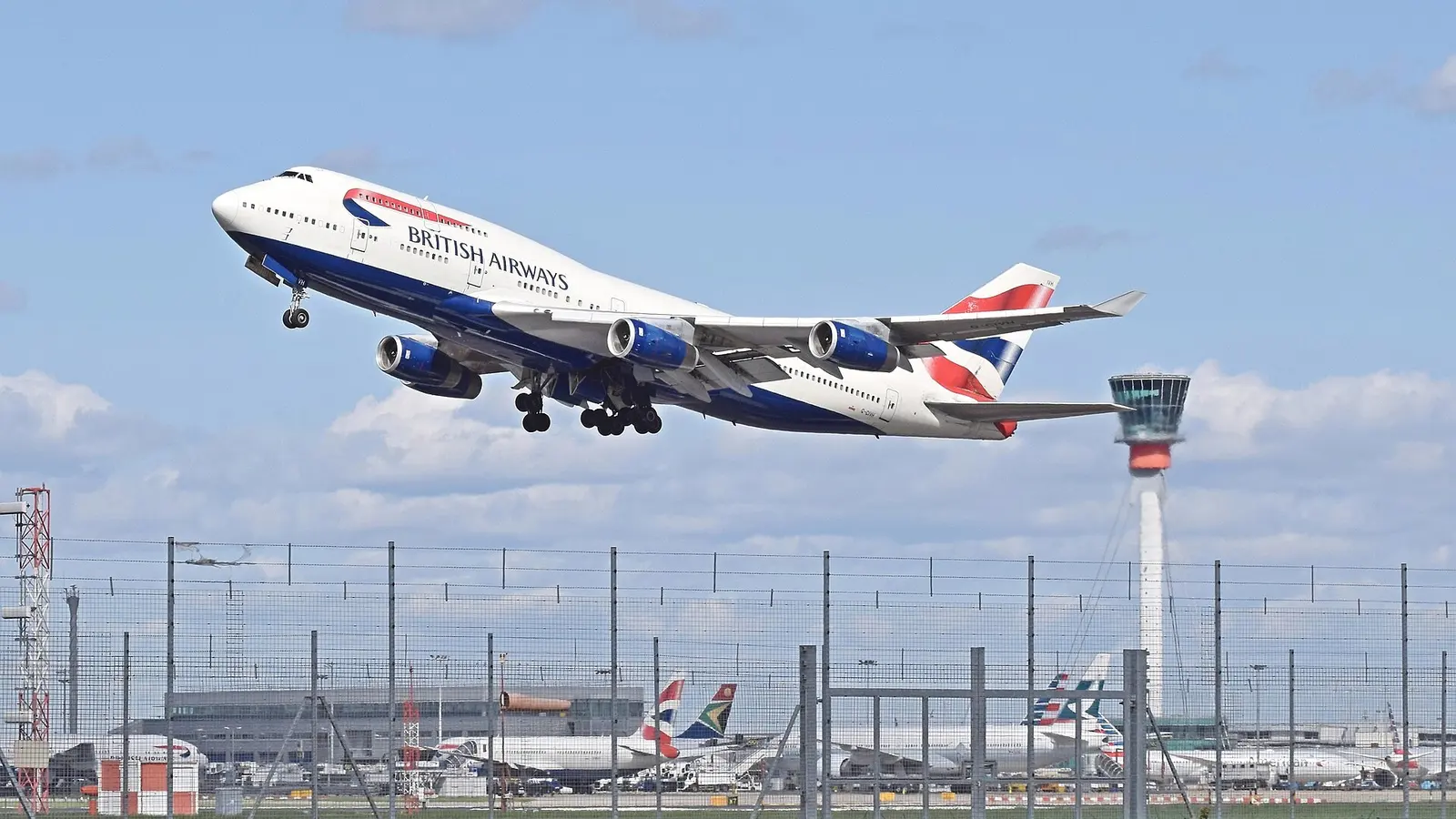
The UK's busiest airport, tucked against the western edge of Greater London off the M4. Home turf for British Airways and the wider oneworld alliance — which is precisely why so many long-haul arrivals here need to reach a low-cost carrier at the other side of the map.
Ryanair's largest global base, sat off the M11 near Bishop's Stortford, some forty miles north-east of the city centre. A single-terminal airport with its own approach off the A120 — straightforward to reach, once you've crossed everything that lies before it. (You'll often see it misspelled "Stanstead"; same airport, same journey.)
Why the direction of travel matters: the natural driving line runs anticlockwise around the M25's northern half — the busier, incident-prone side of the orbital. Get the timing right and it flows; hit it mid-morning and the same tarmac crawls. That single variable, not the distance, decides your journey, and it's the one a flat online quote never tells you about.
Here is the actual line our drivers take from a Heathrow terminal to the Stansted forecourt, laid out one interchange at a time. The two flagged rungs are where this route reliably slows — knowing them in advance is the difference between a planned buffer and a panicked phone call.
Out of your terminal onto the spur road and up to the M25, joining the orbital northbound at Junction 15 — the gateway onto the arc that carries you the rest of the way.
The orbital lifts north past the M40 turn-off for Oxford and Birmingham. Traffic here is usually moving, a brief easy stretch before the busier northern shoulder.
Where national motorway traffic pours onto the orbital from the M1, the carriageway thickens. From here to the M11 is the segment most likely to bog down in a weekday peak.
Three trunk routes knot together here with several sets of signals feeding the roundabout, so queues form even without an incident. We read it live and, where it's snarled, we've already factored the delay into your pickup time rather than discovering it at the wheel.
The approach to the M11 runs through the Epping-side tunnel — one of the orbital's more incident-prone stretches, where a single closure can back traffic for miles. It's the last hurdle before the exit, and the one we watch most closely.
Leaving the orbital at last, the drive turns genuinely quick — the M11 runs clear far more often than the M25, carrying you up toward Essex and the Stansted turn.
Off at Junction 8a onto the A120, signposted straight into the airport complex. A final run past the car-park splits and you're at the terminal set-down — postcode CM24 1RW, the door of a single, simple airport.
The honest range: in light conditions this is a seventy-five-to-ninety-five-minute drive; through the morning build-up across those two flagged junctions it can stretch past two hours. We quote your fare flat either way — the clock never changes the number — and we plan the collection so a slow orbital doesn't become your problem.
The single biggest reason people drive between these airports is a self-arranged connection: a long-haul into Heathrow, a budget hop out of Stansted, booked separately to save money. It's a smart saving — right up until the timing is wrong. Here's the arithmetic no airline does for you.
When two flights sit on separate tickets, they are two unrelated trips in the eyes of both carriers. Miss the second because the first ran late, and there is no free rebooking waiting for you.
The fix isn't luck — it's margin. Widely advised guidance for a separate-ticket, airport-changing connection is blunt about how much room to leave.
That window has to swallow border queues, baggage reclaim, the road itself and a second check-in from cold. Our job is to make the middle stretch — the driving — the most predictable part of it: a chauffeur already tracking your inbound, waiting the moment you clear customs, boot open, engine warm.
Send us both flight numbers and we'll tell you honestly whether your gap is comfortable, tight, or a genuine gamble — before you commit money to the second seat.
One clarity worth having: passenger-rights rules that force airlines to rebook and compensate apply to a single booking reference, not to two tickets you've paired yourself. A provisional 2026 overhaul of those EU rules kept that single-booking principle intact — so the oldest protection remains the best one: enough time, and a car that removes the road from the list of things that can go wrong.
Both airports have moved to camera-enforced, barrier-free forecourts with real penalties for getting it wrong. These are the current figures most drivers only learn about after the fact. With a pre-booked transfer, the charge is built into your fare and handled for you — no barrier, no app, no fine to chase.
The quiet saving: across a single Heathrow-to-Stansted run those forecourt fees, a missed-deadline penalty and the guesswork add up to real money and real stress. A fixed transfer fare absorbs the terminal charges at both ends into one figure agreed up front — the number you're quoted is the number you pay, drop-off included.
Touching down at Heathrow off a long sector with a cheap Ryanair or easyJet seat waiting at Stansted, the two booked apart to save a few hundred pounds. For them the road is the load-bearing link in the whole itinerary — tracked inbound flight, waiting driver, and a straight answer on whether the gap is safe.
Twelve hours in the air is the wrong preparation for three trains and a Tube with a full luggage trolley. A car door held open in Arrivals, bags lifted, and a quiet back seat for the orbital is not a luxury here — it's the only humane way to make the crossing.
A meeting near one airport, a flight from the other, and a diary that can't absorb a two-hour public-transport lottery. Clean single invoice, a mobile office in the back, and a driver who knows the M25 junctions by number rather than by hope.
Four people and four suitcases don't fit the coach-and-changes model without misery. One vehicle, everyone and everything together, door to door — no shuttle bays, no dragging cases up station stairs, no counting heads on a platform.
The value on this route isn't a nicer seat — it's the removal of every variable that can wreck a cross-airport connection. Here's precisely what's folded into the fare.
Your driver waits inside the Heathrow arrivals hall with your name on a board, after customs, ready to take the luggage. No coach-bay search, no kerbside scramble — you walk out and the car is already yours.
We watch your inbound arrival and shift the collection to the real wheels-down time. A delayed flight rearranges the pickup rather than forfeiting it, and the agreed fare doesn't move an inch.
Quoted flat before you travel and sealed there — no meter ticking through a stalled orbital, no surge, no drop-off fee sprung at the Stansted barrier. What you're told at booking is what you pay.
Sixty-five motorway miles is the wrong trip in a cramped car with luggage on laps. We match the vehicle to your party and cases so the longest inter-airport haul in London passes in comfort, not endurance.
Stansted is about 41 miles (66 km) from Heathrow in a straight line, but roughly 65 miles (105 km) by road. The gap between those two figures is the whole story of this journey: the drive can't cut across London, so it travels anticlockwise around the northern half of the M25 and then north up the M11. Heathrow sits in far west London and Stansted sits in Essex to the north-east, which makes them the two most widely separated London airports.
Three practical options. A private car or taxi is the only door-to-door route and takes about 75 to 100 minutes. A direct National Express coach runs between the two airports, taking roughly 1h45 to 2h30 from around £18. Rail has no direct line: it needs about two hours and two changes through central London — a Heathrow rail service to Paddington, the Elizabeth line to Liverpool Street, then the Stansted Express — with your luggage for every leg.
Plan on 75 to 100 minutes of driving in ordinary traffic. A weekday morning across the M25's northern shoulder — roughly the South Mimms to M11 stretch — can lift that toward two hours or beyond after an incident. The direct coach takes 1h45 to 2h30, and the rail route takes at least two hours plus waiting time at two interchanges. We schedule against live orbital conditions rather than a hopeful average, and if you're connecting to a flight we build the buffer around the worst plausible run, not the best.
The direct National Express coach, with advance fares starting around £18 per person. It's the right call for a solo traveller with light luggage and time to spare, and we'll happily say so. But the moment there are two or more of you, or checked bags, or a connecting flight to protect, a private car is usually better value once the fare is split — and far more reliable on timing, which is the thing that actually costs money when it goes wrong.
No. No single rail line connects the two airports. The journey needs three legs and two changes across central London, and you carry your bags through all of it — including the interchange at Liverpool Street. It is the slowest and most awkward of the three options, and the one most likely to unravel if a leg runs late.
It's common and often a real saving, but nobody catches you if it slips — separate tickets mean neither carrier owes you a rebooking if a late inbound makes you miss the outbound. The guarded approach is to leave three to six hours between landing and your onward departure, enough to cover border control, bag collection, the crossing itself and checking in afresh through security. Share both flight numbers with us and we'll give you a candid read on whether your gap holds up before you pay for the second flight.
Nothing is lost. We track the inbound and move your collection to the actual landing time, so the car meets you when you emerge rather than after it's given up waiting. The fixed fare stays exactly as quoted regardless of the new hour — delays are our problem to manage, not a reason to re-charge you.
No. Stansted's Express Set Down forecourt bills £10 for up to fifteen minutes since 19 March 2026, rising to £28 beyond that, on a barrier-free camera system that fines drivers who forget to pay afterwards. Your transfer fare already absorbs the drop, so there's no barrier to negotiate, no app to remember, and no penalty notice arriving days later.
Every day, and with the same care in the opposite direction — the driver watching your Stansted arrival, then running the M11 and orbital back to your Heathrow terminal on a fare fixed in advance. Whichever way you're travelling, it's one booking, one price, and one less thing to think about between two very distant airports.
They're the same journey described two ways: a pre-booked, licensed private-hire car from one terminal to the other. What sets a proper transfer apart from a random ride is that it's arranged ahead through a licensed operator, carries a price agreed in advance, and is met by a named driver rather than hailed in hope. Book yours by WhatsApp, phone or email, or straight through the booking page.
Junction-mapped driving, inbound flight tracking, terminal charges absorbed, and a price locked before the wheels turn. West airport to east airport across the capital's northern edge — booked once and forgotten about.