In this guide
- The Southampton secret: where "London" cruises really sail from
- Port by port: the five departure points that matter
- The timing & fare matrix: London and Heathrow to every gangway
- Embarkation day: the deadline that doesn't behave like a flight
- The luggage maths nobody warns you about
- The pre-cruise night: a strategy worth its hotel bill
- Coach vs train vs private car — the honest comparison
- The questions every first-time cruiser asks
The Southampton secret: where "London" cruises really sail from
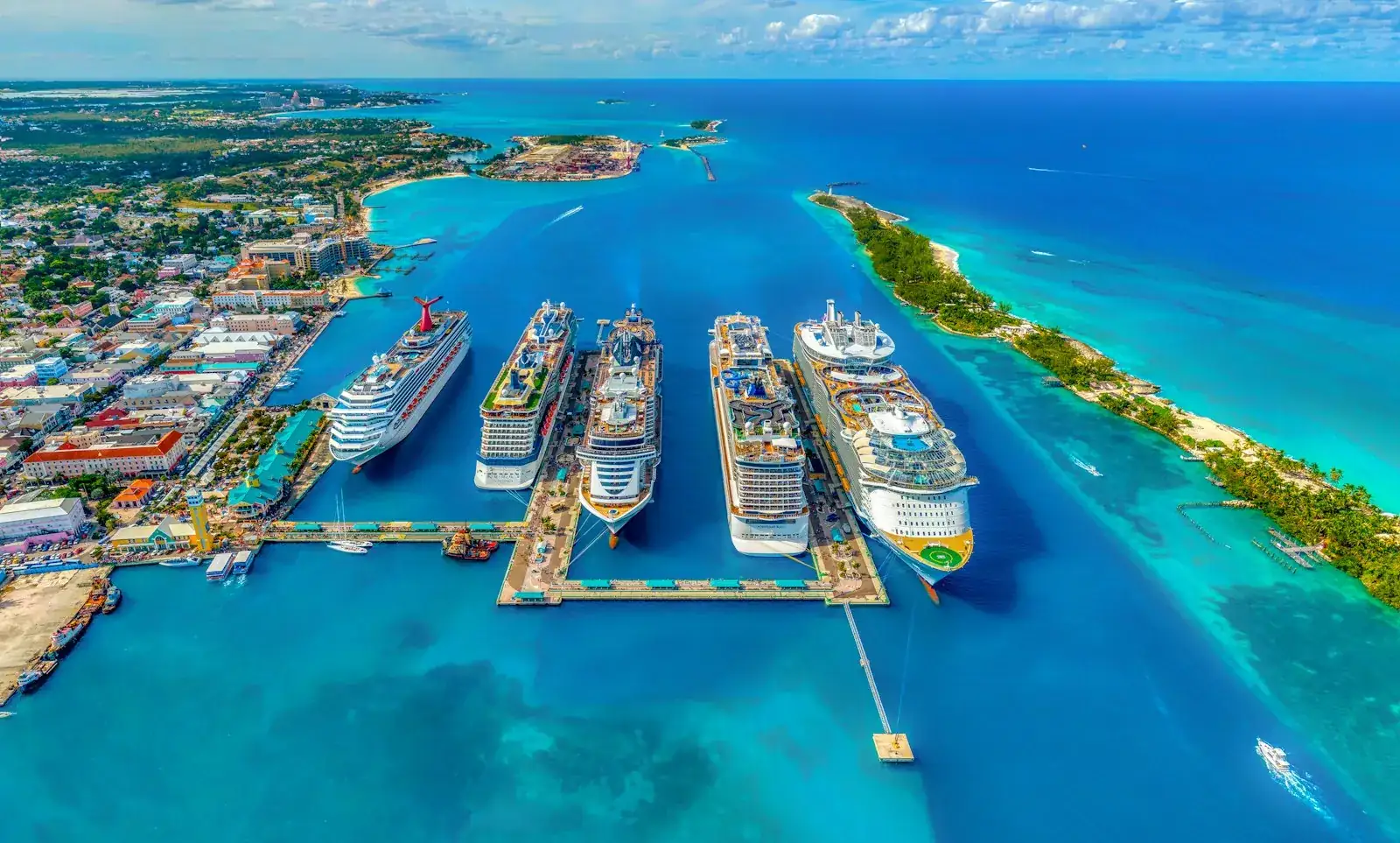
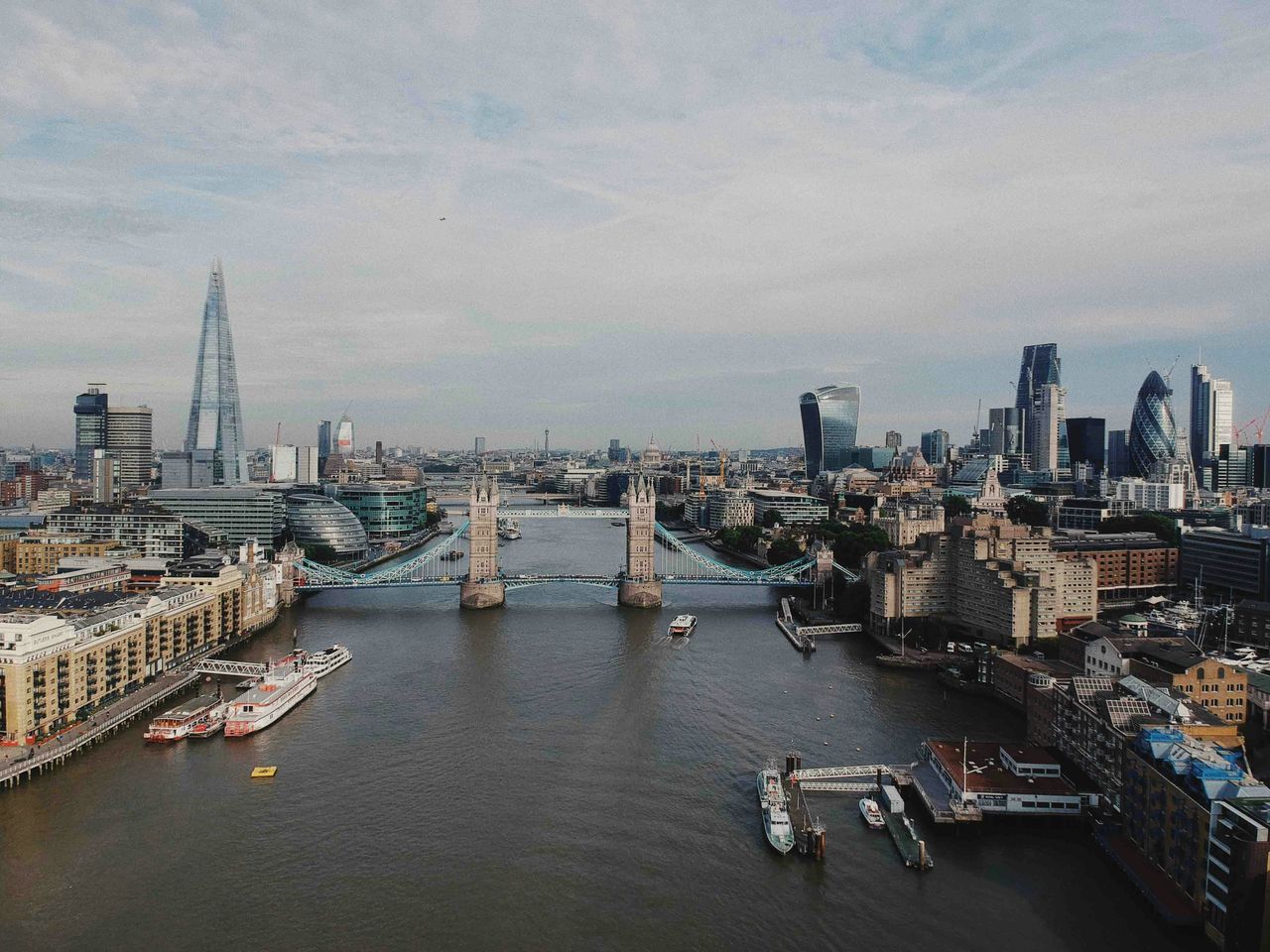
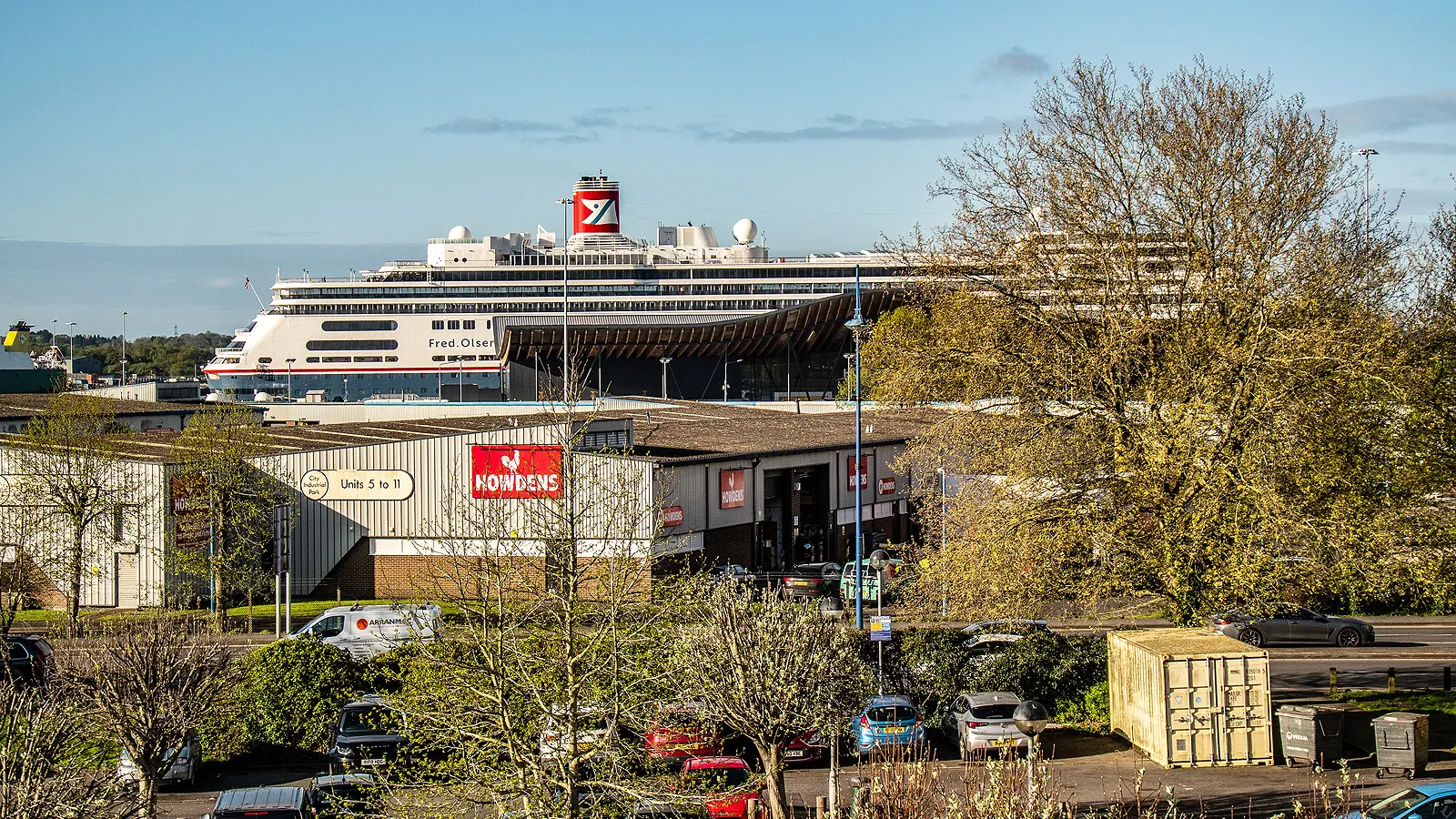
Here is the sentence that saves more cruise holidays than any packing list: the ship on your "London" itinerary almost certainly does not sail from London. The brochures say London because the world knows London — but the deep-water berths that swallow today's resort ships live elsewhere. Southampton, some eighty miles south-west, is Britain's cruise capital and the true home port of the vast majority of departures sold under the capital's name. Dover takes a share on the Kent coast; Harwich serves the Essex side; and only the smaller, saltier vessels — boutique liners, expedition ships — actually come up the Thames to moor in the city's postcard, near Tower Bridge or at Greenwich.
Why does this one fact lead the guide? Because every expensive cruise-transfer mistake we've ever rescued began with it. Passengers who booked a hotel "near the port" and meant near the Tower. Families who allowed forty minutes for a journey that needed two hours. Travellers who landed at Heathrow believing the ship was on the other side of the city rather than the other side of Hampshire. The transfer is the bridge between your flight and your sailing — and you cannot build a bridge to the wrong bank.
Before you plan anything — hotel, flight, transfer — find the exact port and terminal name on your cruise ticket. "Southampton, Ocean Terminal" and "London, Tower Bridge" are two different holidays' worth of road apart.
Port by port: the five departure points that matter
Each of Britain's cruise gateways has its own personality, its own bottlenecks, and its own transfer logic. Here they are as our drivers know them — from the gangway side.
Southampton
Five cruise terminals — City, Ocean, Horizon, Mayflower and QEII — hosting the world's biggest names and hulls. Around 80 miles from central London down the M3, closer still from Heathrow. Embarkation mornings bring thousands of passengers converging at once; the port's approach roads are the day's real bottleneck, and our pickup times are built around that surge, not around an empty-road fantasy.
Dover
The historic Channel port beneath the cliffs, favoured for round-Britain and northern-Europe itineraries. Roughly 80 miles from London via the M2/M20 — a corridor that shares its motorway with Channel freight, so the same traffic wildcards we watch on our Kent airport runs get watched here too. Two cruise terminals inside the Western Docks; both reached kerb-exact.
Tilbury
The London International Cruise Terminal, on the Thames in Essex — the closest thing to a true "London" departure for full-size ships, about 25 miles east of the centre. A modest, charming schedule of smaller lines and no-fly cruises. Its proximity fools people into casual timing; the Dartford Crossing's moods say otherwise, and we plan around them.
Harwich
Around 75 miles north-east, serving Scandinavian and northern itineraries from its dedicated cruise terminal. The run out along the A12 is long, flat and honest — the challenge is simply distance and the discipline of leaving early enough. A favourite for passengers pairing a Cambridge or East Anglia stay with a sailing.
Portsmouth & the Thames Berths
Portsmouth hosts a growing boutique schedule an easy reach beyond Southampton, while the true city berths — near Tower Bridge and at Greenwich — welcome the small luxury and expedition ships. If your vessel genuinely sails from the Thames, congratulations: yours is the rare transfer measured in minutes, and we'll say so at booking.
The timing & fare matrix: London and Heathrow to every gangway
The numbers below are the honest planning figures our own desk uses — typical road times outside the worst peaks, and fixed fares locked at booking with no embarkation-day surge.
| To the gangway at… | From Central London | From Heathrow | Fixed fare (saloon, 1–3 pax) | MPV (4–6 pax) |
|---|---|---|---|---|
| Southampton (all terminals) | 1h 45m – 2h 15m | 1h 15m – 1h 45m | £165 | £195 |
| Dover (Western Docks) | 1h 45m – 2h 15m | 2h 00m – 2h 30m | £160 | £190 |
| Tilbury (London Cruise Terminal) | 50m – 1h 20m | 1h 15m – 1h 50m | £85 | £110 |
| Harwich (Cruise Terminal) | 1h 50m – 2h 20m | 2h 10m – 2h 40m | £175 | £205 |
| Portsmouth (Cruise Terminal) | 1h 45m – 2h 15m | 1h 20m – 1h 50m | £155 | £185 |
What every fare includes: the pickup timed backwards from your ship's check-in window, collection at your exact London address or a name-board meet at any airport, all fuel and port access, and drop at your terminal's own kerb — cases handed to the porters, not wheeled across a car park. Extra stops £10; child seats free on request. The 6am fare equals the 6pm fare, always.
Embarkation day: the deadline that doesn't behave like a flight
Frequent flyers bring airline instincts to their first cruise, and those instincts mislead in both directions at once. A ship is more forgiving than a flight in one way — embarkation windows run for hours, not minutes — and infinitely less forgiving in another: when the gangway comes up, there is no later sailing to rebook onto. Miss a flight and you're inconvenienced; miss a ship and you're chasing it to its next country at your own expense.
So the transfer maths runs like this. Most lines open check-in late morning and close it 60 to 90 minutes before sail-away — a hard cut, enforced. From central London to Southampton, we recommend wheels rolling 4 to 4.5 hours before the ship sails: it lands you inside the middle of your check-in window, absorbs an M3 incident whole, and converts the day's spare time into lunch on the lido deck instead of adrenaline on the motorway. The same logic scales to Dover, Harwich and the rest — and when you book, the desk does this arithmetic for your specific ship, terminal and date, then commits to the answer.
Never plan a same-day international flight connection to a cruise without at least half a day's buffer. A late landing plus a fixed gangway is the single riskiest combination in this entire guide — which is exactly what the next two chapters are for.
The luggage maths nobody warns you about
Cruise packing obeys different physics. Formal nights add garment bags; fortnight itineraries add cases; the freedom from airline weight limits adds… everything else. The average cruising couple travels with roughly double the luggage of the same couple flying city-to-city — and every transfer option handles that truth differently.
Rail means lifting that mountain onto a train, through a change or two, off at a station that is never the terminal, and into a local taxi at the far end — four handling events, each with stairs somewhere in it. The cruise line's coach means hauling it to a central London pickup point first. The private car means one event: your doorstep to the porters' trolleys at the gangway, with an MPV's boot swallowing what a train vestibule cannot. When passengers tell us the transfer felt like the easiest part of the holiday, the luggage maths is usually why.
The pre-cruise night: a strategy worth its hotel bill
The savviest itinerary we see, week after week: fly into London a day early, spend the night in the capital, and take an unhurried morning transfer to the port. It severs the riskiest link in the chain — the same-day flight-to-gangway gamble — while gifting you an evening in London and a rested embarkation morning. The night in a hotel typically costs less than travel insurance's excess, and buys certainty no policy sells.
Two refinements from the desk: first, if you'd rather wake beside the water, sleep in the port city instead — Southampton and Dover both do a brisk trade in pre-cruise nights, and we'll run you down the evening before at the same fixed fare. Second, for the return leg, book your disembarkation pickup with the outbound at 10% off: ships disgorge thousands of passengers in a two-hour window, and the pre-booked car with your name on it is the difference between gliding away and joining the longest taxi queue in Hampshire.
Coach vs train vs private car — the honest comparison
| The option | Where it genuinely wins | The fine print that decides it |
|---|---|---|
| The cruise line's coach | Zero navigation required; your luggage travels with the group; the ship knows where its own coach is | Departs from set central pickup points at set times — you travel on the line's schedule with the earliest-arriving passengers, and it's rarely the bargain it sounds once priced per person |
| The train + local taxi | Raw price for one light traveller; fast rail legs to Southampton and Dover on a good day | Ends a taxi-ride short of every terminal; the luggage handles you as much as you handle it; and a delayed connection argues with a gangway that never loses |
| The fixed-fare private car | Door to gangway in one seat; timed backwards from check-in; priced per vehicle, so couples and families usually beat the coach's per-person total | The dearest choice for a solo backpacker — we say so plainly; its value compounds with every extra passenger, case and year of your knees |
The desk's honest verdict: travelling alone with a rucksack and a flexible spirit? Take the train and spend the difference on board — we mean it. Travelling as two or more, with cruise-scale luggage, against a gangway deadline? The fixed-fare car wins the day it matters most, usually on total cost as well as calm.
The questions every first-time cruiser asks
Do any big cruise ships actually sail from London itself?
The full-size resort ships, no — their draught and length send them to Southampton's deep-water terminals, with Dover and Harwich sharing the schedule. Tilbury's London International Cruise Terminal in Essex hosts mid-size vessels and no-fly itineraries and is the closest a proper ship gets to the capital. The Thames berths near Tower Bridge and Greenwich belong to the boutique and expedition fleet — wonderful if your ticket says so, but check the ticket first: it's the most consequential line on it.
How far ahead should I book the port transfer?
As soon as your sailing is confirmed. Embarkation days concentrate demand — a single Southampton Saturday can see multiple mega-ships boarding at once — and the vehicles sized for cruise luggage are the first to sell through. Booking early costs nothing extra with a fixed fare, locks your pickup time into our roster, and lets the desk pre-plan around your specific terminal. Return pickups booked together take 10% off the homeward leg.
Can you collect us from Heathrow or Gatwick and take us straight to the ship?
Daily in season. The driver meets your flight inside the arrivals hall with a name board — the aircraft tracked from origin, free waiting over the queues — and runs directly to your terminal's kerb. One honesty clause: a same-day landing-to-sailing plan needs generous margin, and if your flight and gangway sit too close together for comfort, the desk will tell you so at booking and suggest the overnight strategy from Chapter Six instead of selling you a gamble.
What happens on disembarkation morning — will a car really find us in the chaos?
Yes, because the chaos is scheduled. Ships publish disembarkation windows, we track your vessel's actual arrival alongside them, and your driver is positioned at the terminal's designated pickup point with a name board as you clear the baggage hall. Thousands leave a ship inside two hours; the pre-booked car is how you're on the road in minutes while the queue for improvised taxis wraps the building. Book it with your outbound and it's also 10% cheaper.
Do you handle mobility needs, extra luggage, or group bookings for cruises?
All three, with notice. MPVs swallow cruise-scale luggage for up to six; larger parties are split across coordinated vehicles arriving together; and accessible requirements — wheelchair stowage, extra transfer time at the kerb, a driver briefed to assist — are arranged at booking rather than improvised on the day. Tell the desk what the party actually needs and the plan is built around it; that sentence is most of our job.
One quote, one fixed fare,
one calm road to the gangway.
Send your ship's name, terminal and sailing date — the desk returns a pickup time built backwards from your check-in window and a fare that ignores the calendar's demand. The rest of embarkation day is yours.