A Heathrow to Oxford taxi runs 55 to 90 minutes on a fare fixed before you fly — flight-tracked, met inside arrivals with a name board, and finished at a porter's lodge or front door rather than a bus stand. The honest alternatives: The Airline coach from £25, around 80 minutes off Terminal 5's kerb to Gloucester Green; and the train with one compulsory change, 1h15 at its fastest and 1h50 on average, ending at Oxford station. No direct rail link exists — and only one of the three options knows which side of Oxford your street is on.
| Taxi, door to door | 55–90 min · fixed fare |
| The Airline coach | ~80–90 min · from £25 |
| Train, 1 change | 1h15 fastest · 1h50 avg |
| Direct train? | None exists |
| Road distance | ~47–55 miles via M40 |
| Coach small-hours gap | ~23:30–01:30 |
| College-lodge drop | Included |
| Arrivals meet & greet | Name board, tracked |
| M40 | One motorway, one slow spot | STOKENCHURCH |
| J8A | Door for Headington & east | A40 IN |
| J9 | Door for Summertown & north | A34 IN |
| LODGE | Porter-exact college drops | INCLUDED |
| MEET | Name board inside arrivals | TRACKED |
Three genuine ways connect this airport to this city, and each one earns its place for somebody. What follows is the comparison we would give a friend — current figures, structural limits and all, because a recommendation you can't trust is worth nothing.
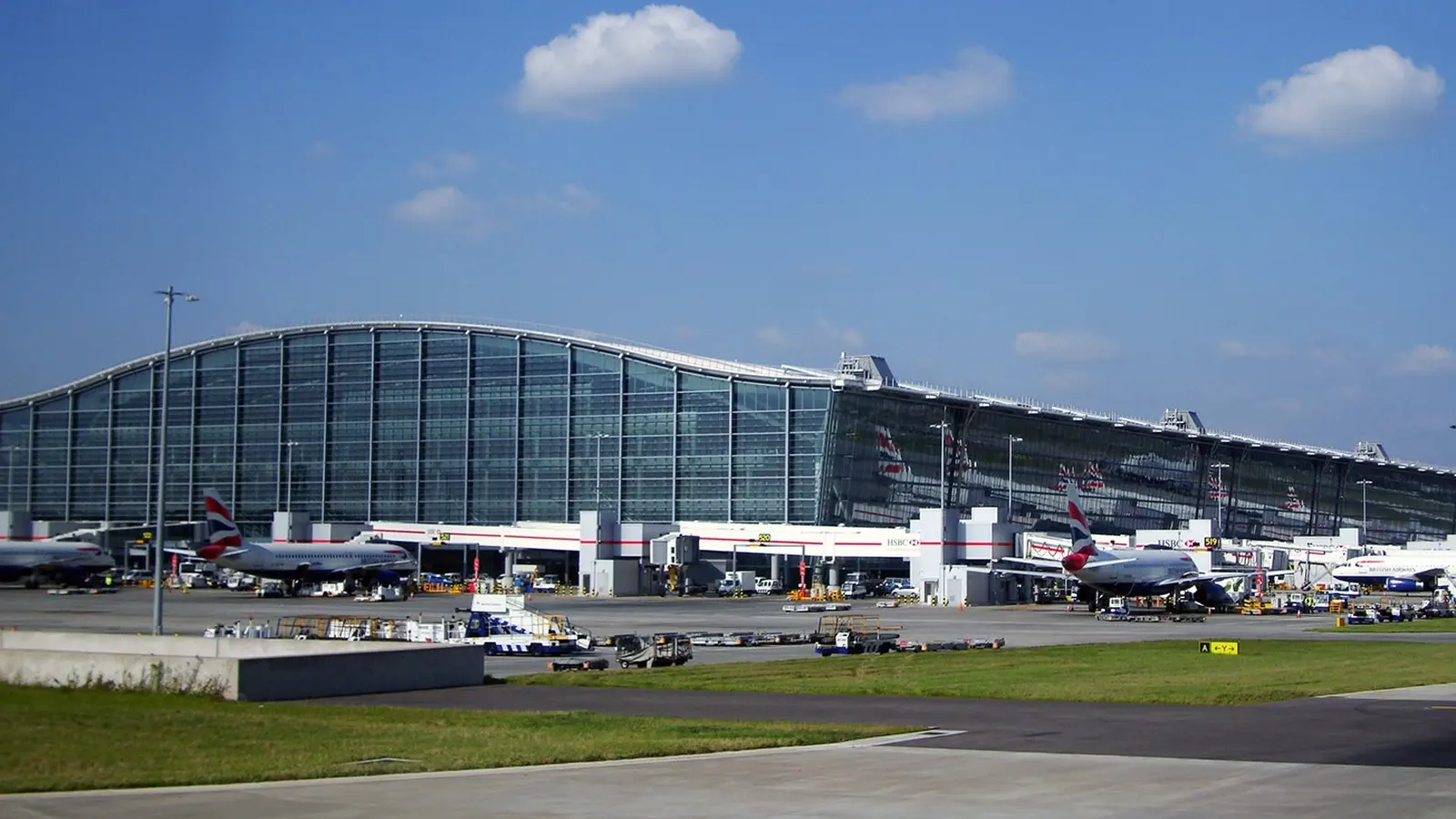
| Mode | Journey time | Cost signal | Where it leaves you |
|---|---|---|---|
| Private taxi / transfer | 55–90 min by time of day | Fixed, quoted before you fly | Porter's lodge, ward entrance or front door — correct side of the city |
| The Airline coach (Oxford Bus Company) | ~80 min T5 · ~90 min central area | From £25 single · £31.50 return | Gloucester Green bus station, central Oxford |
| Train, changing once | 1h15 fastest · 1h50 average | Varies widely by route and time | Oxford station, western edge of the centre |
↔ Swipe the table sideways on mobile
Credit where it is due: The Airline is one of the better airport coaches in Britain — up to every 20 minutes through the day, every 30 to 45 through the evening and night, direct from Terminal 5 and the central bus station, with group tickets covering up to four people. A solo traveller with one bag and a flexible morning should weigh it seriously, and we would rather tell you that than pretend otherwise.
The train needs one sentence of honesty more than the others: there is no direct rail line from Heathrow to Oxford, and there never has been. Every rail journey changes once — out through London Paddington on the Elizabeth line or Heathrow Express and back west on GWR, or round the other way via the Elizabeth line and a connection up from Reading. The planners list more than three hundred workable combinations a day, and not one of them skips the change or the platform-to-street walk at Oxford station when it's done.
The question that actually decides it: not "which is cheapest to Oxford?" but "which gets me to my exact address in Oxford?" The coach terminates at Gloucester Green; the train terminates at the station; both hand you a final leg across a city famous for keeping cars out of its heart. The taxi is the only mode whose journey ends where yours does — and on the wrong day, the only one still running when you land.
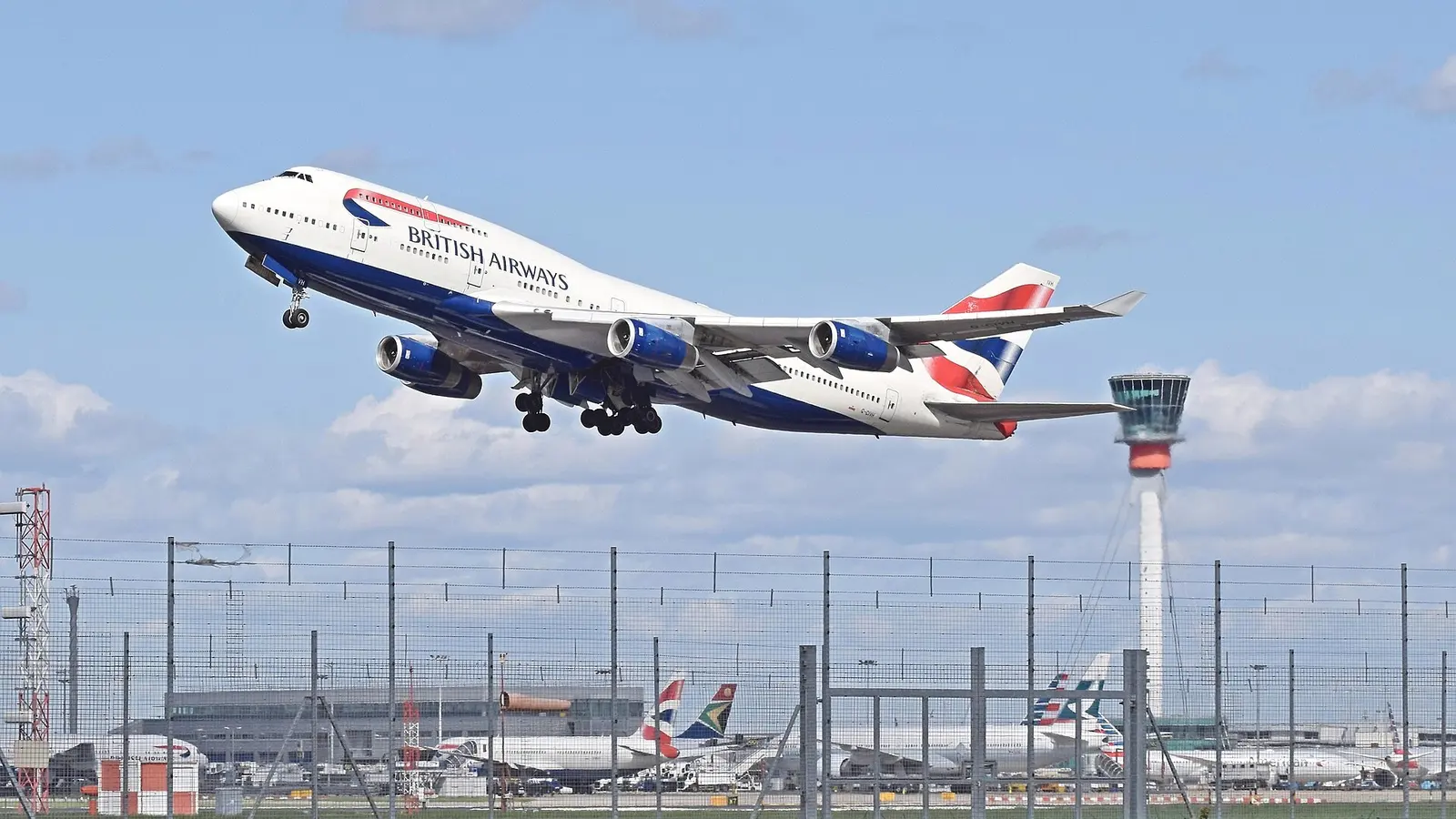
Oxford defends its medieval core with bus gates, one-ways and camera-enforced filters, so the side you enter from decides how your journey ends. The M40 offers exactly two clean approaches — Junction 8a onto the A40 for the east, Junction 9 onto the A34 for the north and west — and we commit to one from your address before the driver leaves the airport.
| Your Oxford | The right door | What choosing it correctly buys you |
|---|---|---|
| Headington — John Radcliffe, Churchill & Nuffield hospitals | J8a → A40 | The A40 delivers Headington before the city even starts — hospital appointments never meet a bus gate |
| Oxford Brookes & the Headington student houses | J8a → A40 | Campus and term addresses reached from the east without crossing the centre once |
| Cowley, the Plain & East Oxford | J8a → A40 → eastern approach | The Cowley Road side unlocks from its own end — no loop around the restricted core |
| High Street end — Magdalen, Queen's, Examination Schools | J8a → A40 | The eastern colleges sit nearest this door; the approach arrives on their side of the bus gates |
| Summertown & the Banbury Road corridor | J9 → A34 → Peartree | North Oxford from the north — entering at J8a instead means threading the whole city to get here |
| Jericho, Walton Street & the Saïd Business School | J9 → A34 | The station quarter and Jericho's grid reached from Peartree without touching the High |
| Wolvercote, Woodstock Road & north villages | J9 → A34 | The A44/A40 roundabout country handled from the correct compass point entirely |
| Botley & West Oxford | J9 → A34 south → Botley interchange | The western approach — newly relevant again as Botley Road reopens in stages this month after three years shut |
↔ Swipe the table sideways on mobile
Why no coach can copy this: a scheduled service must run one published line to one fixed stand, whatever address its passengers actually hold. A private car reads the destination first and picks the junction to suit it — a free decision, made at booking, that regularly saves fifteen to twenty minutes of crawling across a city built eight centuries before the car. It is the single cheapest upgrade on this corridor, and it costs nothing.
As motorway runs go this is one of England's cleanest — but it has a rhythm, and knowing where the minutes hide is how a quote stays honest. Here is the journey in six legs, with the truth about each.
| Leg | Road | What really happens here |
|---|---|---|
| 1 · Off the airport | Terminal → M25 J15 | A short northward hop on the orbital — this run borrows only three junctions of the M25, not the slog other corridors suffer |
| 2 · The only interchange | M25 → M40 J1a | The junction that matters: onto the M40's spine at Denham, and the first place a weekday morning can steal ten minutes |
| 3 · Buckinghamshire cruise | M40 J2–J5 | Beaconsfield and High Wycombe slide past — free-flowing outside the peaks, commuter-thick inside them |
| 4 · The escarpment | M40 J5–J8 · Stokenchurch cut | The chalk cutting at Stokenchurch and the long drop past Lewknor into the Oxfordshire plain — the route's signature view and its one persistent pinch |
| 5 · The door decision | J8a or J9 | Where this page's whole argument cashes in: east door or north door, already chosen from your address |
| 6 · Your Oxford | A40 / A34 → your street | Down the correct corridor to lodge, ward, hotel or home — no bus gates met, no centre crossed, no circling |
↔ Swipe the table sideways on mobile
The honest clock: weekends and off-peak, 55 to 65 minutes; the weekday morning crush over the escarpment and at the M40 interchange, 70 to 90; after ten at night, 50 to 60 with the road to yourselves. Wheels-down to Oxford doorstep — immigration, bags and all — budget around two hours. We quote against your real landing time, never the brochure's best case.
Everyone quotes the drive; nobody quotes the forty minutes between the runway and the kerb. So here is the full sum, scenario by scenario — the same arithmetic our dispatch desk runs when it times your driver to the hall, and the reason a delayed flight costs you nothing here.
| Your arrival | Runway → kerb, realistically | Oxford doorstep, from touchdown |
|---|---|---|
| Domestic or cabin-bags-only | ~30–40 min through the hall | ~1h30–1h50 to your door |
| European arrival with hold luggage | ~45–60 min with the carousel wait | ~1h50–2h10 |
| Long-haul at a peak arrivals bank | ~60–90 min through border and bags | ~2h10–2h40 — we watch, the car simply re-times |
| Red-eye landing before 06:00 | ~35–45 min in a quiet hall | ~1h30–1h45 — the M40 at dawn gives most of it back |
↔ Swipe the table sideways on mobile
Why this table matters more here than on most routes: the coach and the train both sell you a departure time you must gamble on before you've cleared the border. Our pickup isn't a time at all — it's a flight number. Whatever hour you finally walk out, the name board is already up, the waiting is already covered, and the arithmetic above has already been done for you.
The Airline's network treats Heathrow's terminals unequally, and Terminal 4 arrivals discover it with a suitcase in hand. A private car treats all four identically: name board inside your arrivals hall, whichever door the airline gave you.
| Landing at | The Airline coach | Our car |
|---|---|---|
| Heathrow Terminal 2 to Oxford | Walk to the central bus station first — ~90 min ride | Met inside T2 arrivals, straight to the car |
| Heathrow Terminal 3 to Oxford | Same central bus station, same ~90 min | Met inside T3 arrivals — long-haul trolleys planned for |
| Heathrow Terminal 4 to Oxford | No direct coach — free shuttle to the central area first, then board | Met inside T4 itself; the journey starts where you're standing |
| Heathrow Terminal 5 to Oxford | Direct from T5 — ~80 min, the coach at its best | Met inside T5 arrivals, fastest run of the four |
↔ Swipe the table sideways on mobile
The T4 asterisk nobody prints: from Terminal 4 the "80-minute coach" is really a shuttle, a wait, and then the coach — the pre-journey journey that turns a fair comparison unfair. From T5 the coach genuinely shines; from T4 the car isn't merely nicer, it's the only mode that begins at your terminal at all.
Half this corridor's traffic moves to a university rhythm — and the university's city keeps rules that defeat drivers who don't know them. This is the knowledge that turns a drop-off from "as close as I could get" into the porter's lodge itself.
A college's postal address and its working entrance are rarely the same door. We navigate to the porter's lodge that actually receives arrivals — and where a lodge hides on a restricted or cobbled lane, the driver knows the nearest lawful kerb and walks the cases the final yards.
Oxford's bus gates and camera filters work by the clock — a street a car may use at dawn is closed to it by breakfast. Route choice here isn't one decision but a timetable of them, which is why the door we enter and the lane we finish on both depend on when you land.
An international student's arrival is not a weekend bag — it's a year in two 30-kilo cases plus the duvet bought at the airport. Vehicle size is set by cases, not just seats, at booking; nine-seaters and estates exist for exactly this fortnight.
| The Oxford year | Roughly when | What it does to this corridor |
|---|---|---|
| Michaelmas arrivals — "0th week" | Late September into early October | The year's heaviest inbound fortnight: international freshers, families, luggage at scale — book the airport leg early |
| Hilary term begins | Mid-January | The January return wave meets the darkest mornings — flight-tracking earns its keep |
| Trinity term begins | Late April | The lighter return, but exam-season nerves make punctuality non-negotiable |
| Graduation & degree days | Clustered through summer | Families inbound in fours and fives — group-sized cars beat two coach fares comfortably |
| Summer schools & visitors | July and August | Language-school waves and conference traffic keep the M40 leg busy out of term too |
↔ Swipe the table sideways on mobile
Dates drift, the pattern doesn't: the university publishes exact term dates each year, but the shape of the demand never changes. If your arrival falls inside an arrivals week, the honest advice is simple — fix the car when you book the flight, not the night before.
Oxford's coach link is impressively long-houred — and still not endless. Between roughly half past eleven and half past one, the timetable takes its only breath of the day. Guess which arrivals band Heathrow hands to delayed long-hauls.
A 22:40 landing that slips ninety minutes puts you kerbside in the one window with no coach to catch and the app maps at their thinnest. A pre-booked car erases the problem before it exists: the flight number is the booking, so the delay travels with you.
Night is this road's best self — the interchange clear, the escarpment empty, Oxford's approaches unguarded by traffic. Fifty to sixty minutes door to door is normal, and the fare is the same figure it was at noon. The quietest hours are quietly the bargain.
Headington's wards keep no office hours, and neither do we. Small-hours runs to the John Radcliffe — arriving relatives, urgent returns, discharged patients heading home — are driven with the patience that 3am journeys deserve, priced exactly as the daylight ones are.
The problem: your long-haul lands late and the departure you'd aimed for is gone — a jet-lagged queue at a ticket machine as the timetable thins. Our fix: the booking is tied to the aircraft, not the clock; the pickup re-times itself and the waiting is absorbed, not billed.
The problem: a sat-nav sends a Summertown arrival in at Junction 8a and donates twenty minutes to bus gates and one-ways across the core. Our fix: the junction is chosen from your address at booking — the crawl never starts.
The problem: the Stokenchurch stretch queues exactly when morning meetings and check-ins leave no slack. Our fix: peak departures carry the pinch in the plan by default — the buffer exists before the brake lights do.
The problem: central Oxford defeats unfamiliar drivers, and passengers end up dragging cases over cobbles from wherever surrender happened. Our fix: drivers who know which lodges take a car to the door, from which direction, at which hours — and who walk the last yards when the lane demands it.
The problem: arrivals fortnight multiplies demand while family luggage multiplies volume, and an undersized car turns one journey into two. Our fix: party size and case count set the vehicle at booking, with the university calendar already priced into our planning.
The problem: Oxford's street network is mid-evolution — Botley Road only now reopening in stages after its long closure, filters and gates shifting with council schemes. Our fix: routing is checked on the day, not memorised from last year; the door and the final approach flex with the works.
Freshers flying in for Michaelmas, parents arriving for matriculation and degree days, year-abroad returners with a household in their hold luggage — met at arrivals, delivered to the lodge, cases carried to the door the porter actually opens.
Visiting fellows, conference keynotes, Saïd Business School cohorts and the science-park traffic of a city that exports ideas — receipted, punctual, and dropped at the right building through the right door of town.
International patients and their families bound for the John Radcliffe and its neighbours — journeys where the J8a door means Headington arrives before the city does, and where appointment times are treated as deadlines, not suggestions.
Visitors landing at Heathrow with the colleges today and the Cotswolds tomorrow — then Blenheim Palace, Bicester Village or a river town the day after. One desk books every leg, so the itinerary travels on fixed figures throughout.
The paperwork behind a car matters more with every mile it covers. Here is what the UK's private hire framework actually guarantees on this run — and what it feels like from the back seat.
UK law lets a private hire vehicle carry you only on a job logged through a licensed operator — your Oxford transfer exists as a recorded commitment, with a named driver and vehicle, before a wheel turns. Nothing about it is improvised at a kerb.
Operator, driver and vehicle each hold their own licence: enhanced-checked drivers, inspection-cycle vehicles, an operator answerable for the job around the clock. The chain is boring by design — boring is what you want under a 3am motorway run.
The fare fixed at booking survives the escarpment queue, the carousel delay and the hour of arrival. No meter climbs while the M40 idles; no surge appears because your flight was late. The number you agreed is the number you pay.
Two reviews from our Google profile, quoted exactly as written.
"Great service. Used them to get back to London from the Cotswolds. Rapid communication. Let us know our driver and car in advance. Lovely driver. Came early, communicated well. Nice car."
— Alex Feben · Google review"Fast, efficient, service. Good communication. Thanks Transfers"
— Burgess Bagpipes · Google reviewIt's a fixed fare, quoted before you travel and priced from your terminal and exact destination — a Summertown house, a High Street college and a Headington ward all price slightly differently, and the figure you're given holds whatever the traffic or your flight does. Send your flight number and address by WhatsApp or phone, or use the booking page for an instant quote. No meter, no surge, and airport pickup arrangements handled within it.
Fifty-five to ninety minutes kerb to door, and the spread is the honest part: weekends and off-peak run 55 to 65, the weekday morning peak over the Stokenchurch escarpment stretches to 70 to 90, and after ten at night the road empties and 50 to 60 is normal. From touchdown to an Oxford doorstep — immigration and luggage included — a realistic budget is around two hours.
Three real options. A private taxi or transfer, 55 to 90 minutes door to door on a fixed fare. The Airline coach from £25, roughly 80 minutes from Terminal 5 or 90 from the central bus station, ending at Gloucester Green. Or the train with one compulsory change — out via Paddington or round via Reading — 1h15 at its perfect fastest, 1h50 on average, ending at Oxford station. There is no direct train, so the choice is really about which final stop matches your actual destination.
No. Every rail journey between them changes exactly once: either the Elizabeth line or Heathrow Express into London Paddington and a GWR service back west, or the Elizabeth line to a connection through Reading. The fastest workable combination is about 1 hour 15 minutes and the average is nearer 1 hour 50 — and every version ends at Oxford station rather than your street, with the journey planners listing over three hundred one-change combinations a day between the pair.
Singles start from £25 and returns from £31.50, with group tickets covering up to four travellers — genuinely fair value, and we'd rather say so than pretend otherwise. It runs up to every 20 minutes by day and every 30 to 45 through the night, taking around 80 minutes from Terminal 5 and 90 from the central bus station to Gloucester Green. Its structural limits: Terminal 4 needs a shuttle first, the small hours contain a service gap, and the journey ends at a bus station rather than your address.
Travelling alone, light, in daytime, to somewhere walkable from Gloucester Green? Take the coach; it's good. The car wins the moment any of those conditions fails: two or more travellers usually beat the combined coach fares with one fixed figure, checked luggage stops being a haul, Terminal 4 stops being a shuttle ride, a delayed flight stops being a lost seat, and the destination becomes your actual door — reached through the correct side of a bus-gated city.
The M25 briefly, the M40 through the Chilterns, then one of Oxford's two motorway doors: Junction 8a and the A40 for Headington, the hospitals, Cowley and the eastern colleges, or Junction 9 and the A34 for Summertown, Jericho, the Saïd Business School and the north. The junction is chosen from your address when you book and adjusted on the day if the traffic argues — it's the decision that saves the crawl across the restricted centre.
Yes — that's the standard, not the exception. Tell us the college and we navigate to the lodge that actually receives arrivals, approaching from the direction that works at that hour of Oxford's bus-gate clock. Where a lodge sits on a lane cars can't lawfully reach, the driver stops at the nearest legal kerb and walks the cases the last yards. Students, parents and visiting academics are the backbone of this route.
Constantly — it's one of this corridor's defining journeys. The J8a door means Headington is reached before the city centre ever begins, so hospital runs never meet a bus gate. Drivers drop entrance-exact by department, load at patient pace, and treat appointment times as hard deadlines. Small-hours arrivals for urgent visits are part of the service, not an exception to it.
By us, always: we operate 24/7 and the night M40 delivers Oxford in 50 to 60 minutes. By coach, mind the gap — services pause roughly between 23:30 and 01:30, which is precisely the window delayed long-hauls get pushed into. A pre-booked, flight-tracked car is the one plan that a two-hour delay cannot break, because the driver's schedule moves with the aircraft, not the original timetable.
Every booking, all four terminals. The flight is watched from its origin airport, so a delay simply re-times the job with waiting built in; the driver stands inside your arrivals hall with a name board for whenever you clear it. You walk out to a person expecting you — not to a coach stand, a ticket queue or a taxi line.
Yes — both sit naturally off this corridor, and en-route stops or same-day onward legs are arranged at booking so the price stays a written figure rather than a running meter. Tell us the plan and we'll shape the route around it; plenty of arriving visitors treat the transfer itself as day one of the itinerary.
Every day — dawn check-ins timed backward from your airline's cutoff with the morning escarpment already allowed for, college pickups in arrivals-week volume, and the same fixed-fare logic in reverse. The full departures guide lives on our Oxford to Heathrow taxi page, or book either direction by WhatsApp, phone or email.
The correct junction chosen from your address, the escarpment priced into the plan, the coach credited where it's good and beaten where it isn't — Heathrow to Oxford on one fixed figure, tracked from take-off to doorstep.