Get London Transfer Ltd is a TfL licensed private hire operator - London private hire operator licence number 11588. getlondontransfer.co.uk and rushxo.com are trading names of Get London Transfer Ltd, and rushxo.co.uk is the UK site of rushxo.com. Every booking made on these websites is operated by Get London Transfer Ltd.
Heathrow ⇆ Paddington · ~16 Miles · The Comparison Done Honestly
Heathrow to Paddington taxi — we know about the Express. Here is the other half.
Landing at Heathrow Airport? Let us take the stress off
Your driver is waiting with a name board the moment you come through customs into arrivals – not in a car park, not on the phone. We track the flight, so a late landing costs you nothing, and the first 60 minutes after the plane lands are free waiting time. Luggage trolleys, a child seat, a wheelchair-friendly car: tell us when you book and it is ready.
SIM card and money on the way. Still carrying your own currency? That is fine: every car takes cards and contactless, so you need no pounds in hand for the journey. If you want a UK SIM or some cash, say so and your driver will point you to the kiosks in arrivals (SIM cards: WHSmith and the Sim Local / Simpoint kiosks in every arrivals hall; currency: Travelex and ICE desks in all terminals (airport rates are the worst in London – change £20–£50 for the first day and the rest in town)) or, usually cheaper, stop at a supermarket, Post Office or bank on the route to Paddington. Our local drivers know where the fair rates and the working cash machines are – trust them to sort it in minutes.
Disabled-friendly arrival.Special assistance: Book via your airline at least 48h ahead. Assistance areas: T2 Level 5 behind check-in A/B; T3 Level 1 above A/B; T4 Zone B by Excess Baggage; T5 Zone E; help points throughout. Tel T2-4 020 8757 2700, T5 020 8283 6415. Step-free: Accessible lifts throughout; accessible passport lanes; lifts to rail and tube platforms. Guide & assistance dogs: ADI/IGDF-recognised assistance dogs accepted; notify airline 48h; relief areas in every terminal before and after security and in arrivals (e.g. T5 Level 0 Assistance Area; T3 Departures next to Gate 27). Pets: Heathrow Animal Reception Centre approval at least 72h before flight; +44 20 8745 7894. Airport accessibility page Our driver meets you at the assistance desk if you prefer, carries folding wheelchairs and walkers free, and assistance dogs always travel with you at no charge.
Get an Instant Quote
🦉Tripadvisor Travelers' Choice 2025Excellent★★★★★★ Trusted24/7 UK Support
★★★★★ Five-star rated by families who did the arithmetic and travellers who landed at 2am.
Let us open with our competitor’s best line: a nonstop train covers this route in fifteen minutes, hundreds of times a day. It is superb, and pretending otherwise would tell you everything about us. So here is what the fifteen minutes leaves out: it ends at a platform, not your hotel on Sussex Gardens; it sells tickets per head while we sell the whole car once; and its last departure leaves just after midnight while long-haul keeps landing until dawn. Roughly one traveller in three on this corridor is better served by a door-to-door car — the family, the luggage-laden, the night-landed, the hotel-belt bound — and this page exists to tell you, accurately, whether you are that traveller.
The rare route where we publish the rival’s timetable on our own page — because the third of travellers we suit best deserve to know which third they are.
The Split, Printed Plainly
Take the train, or book the car: the sorting hat for this corridor
Most transfer sites bury this question; we lead with it. Read both columns, find yourself, and act accordingly — whichever way it sends you, you will travel better for having been told the truth.
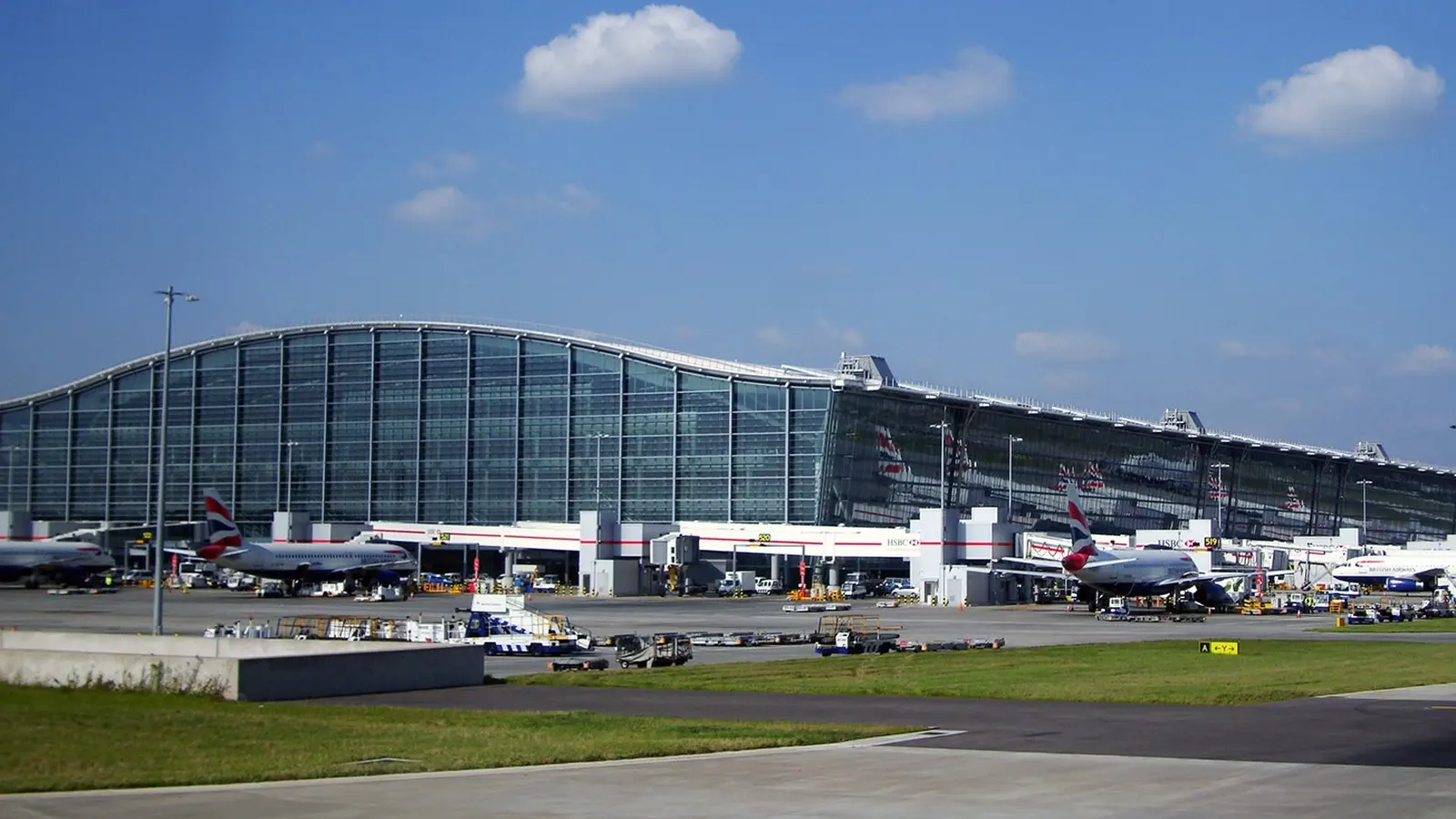
Heathrow Airport Terminal 5 · Photo: Warren Rohner, CC BY-SA 2.0 via Wikimedia Commons
Ride the rails when…
You are one or two, travelling light: a couple with cabin bags, landing mid-afternoon, staying within a trolley-push of the station — the fifteen-minute train is the right call and we will not pretend otherwise.
The station is genuinely your destination: connecting onward from the platforms themselves — a westbound rail leg, a quick meeting on the concourse — means the terminus is the finish line, and the train owns finish lines it built.
You enjoy the maths at one seat: solo, the per-person ticket is defensible; the arithmetic only turns on you when you multiply it — which is precisely where the next column begins.
Book the car when…
You are three or more, or luggage-heavy: one written fare swallows the whole party and every case — while the rival’s price multiplies by heads and its platforms multiply by trolleys.
Your bed is in the hotel belt, not the station: Sussex Gardens, Lancaster Gate, Craven Road, Bayswater — the “fifteen minutes” never mentions the final half-mile of pavement with a fortnight’s luggage. Our journey ends at reception.
The clock is against the timetable: land after the ~00:13 last train and the night hole runs to 04:12 — or check out at 4am for a dawn long-haul. Those four hours belong entirely to the road, and the night road runs this route in under half an hour.
Why we publish a page that sends some readers to the competition: because the reader we keep — the family of four, the 01:30 arrival, the guest at a Lancaster Gate townhouse — books with total confidence, having watched us be honest about everyone else. On a corridor owned by a famous train, credibility is the only marketing that works.
The road in: tunnel, elevated miles, and a station district that fights back
Short routes reward precision more than long ones — there is no motorway hour to absorb a sloppy start. These are the three moves that decide whether sixteen miles takes thirty-five minutes or seventy.
PAD / 01
The terminal exit, played correctly
T5 releases straight west onto its own spur, T4 threads the southern perimeter, T2 and T3 climb out of the central tunnel — three different opening moves for the same destination. The driver holds your terminal in the plan from booking, so the first mile is never spent correcting the wrong one.
PAD / 02
The M4–A4 elevated run
The route’s spine rises onto the flyover miles past Brentford and Hammersmith — quick even in traffic, quicksilver at night. The judgement call is where to leave it: the Westway’s Paddington slip lands almost on the station’s roof, but the surface streets win at certain hours, and we choose per journey with live eyes.
PAD / 03
The basin endgame
Paddington’s district is a knot of one-ways, bus gates and hotel forecourts wrapped around a canal basin — the last four hundred metres embarrass more drivers than the first fifteen miles. Knowing which end of Sussex Gardens flows which way, and where a given hotel actually lets a car stop, is the local knowledge this page quietly sells.
The night figure worth remembering: from roughly 22:30 to 05:30 this journey settles at 25 to 35 minutes door to door — quicker than the daytime rail-plus-walk total for most hotel-belt addresses, and available at exactly the hours the timetable is not. The night hole is not our niche; it is our home ground.
Geo Guide · Paddington Beyond the Platforms
The district the ticket machines never mention: where our journeys actually end
“Paddington” in a search box usually means a bed, a ward or a doorstep — not a concourse. Here is the real map of the district, with the drop-off craft each corner demands.
Paddington district drop-off zones
Destination zone
What it is
The drop-off craft
Sussex Gardens
The great terrace of guesthouses and small hotels — the district’s true arrivals hall
A long one-way with strict stopping rules — we approach from the correct end and set down within steps of your exact number, cases to the door
Lancaster Gate & Hyde Park edge
The grand squares and park-side hotels south of the basin
Forecourt etiquette varies house by house — the driver knows which take a car inside the railings and which prefer the kerb
Craven Road & Praed Street
The working spine of the district — hotels above shops, entrances easy to overshoot
Doorways pre-located before arrival, so nobody circles the block while the meter of patience runs
St Mary’s Hospital
The district’s major hospital, folded tight into Praed Street
Entrance-exact drops by department, patient-pace loading, and early-appointment runs timed against ward clocks rather than traffic guesses
Bayswater & Queensway
The apartment-hotel quarter one ridge west
Serviced-apartment check-ins often sit behind unmarked doors — we carry the access notes from your booking so the last step is a lift, not a search
Little Venice
The canal-side crescents north of the basin
Bridge weight limits and blocked satnav shortcuts abound — local routing arrives the elegant way, waterside
The station itself
For sleeper boarders and onward rail connections
Set-down positioned by your platform’s end of the building — including the late-evening run for the overnight train west, a booking the last Express cannot make
↔ Swipe the table sideways on mobile
The half-mile that decides everything: rail delivers every passenger to one fixed point and lets the district do its worst; we deliver each passenger to their own point and make the district irrelevant. On a wet January night with four cases and a sleeping child, that half-mile is the entire product — and it is the half the fifteen-minute headline never mentions.
The Standing Diary
Four Paddington runs that explain this page better than we can
PD / A
The family-of-five equation
Two adults, three children, six cases off a Florida flight — five train fares against one fixed car, and the car finishes at the Lancaster Gate reception desk instead of a platform half a mile from it. The booking form filled itself.
PD / B
The 01:40 landing
Delayed out of Dubai, through the doors at two in the morning — ninety minutes after the last train left, two hours before the first one returns. Name board up, Westway empty, Sussex Gardens by 02:25. The night hole, filled as routine.
PD / C
The sleeper connection
A late-evening arrival chasing the overnight train to the far south-west — a connection the timetable technically permits and practically punishes. One car, one loading, boarding with twenty minutes and a whisky bar to spare.
PD / D
The 04:15 checkout
A Praed Street hotel, a dawn long-haul, and a departure board still four hours from its first train. Cases down at 04:10, T3 forecourt by twenty to five — the return half of a round trip booked in one message a fortnight earlier.
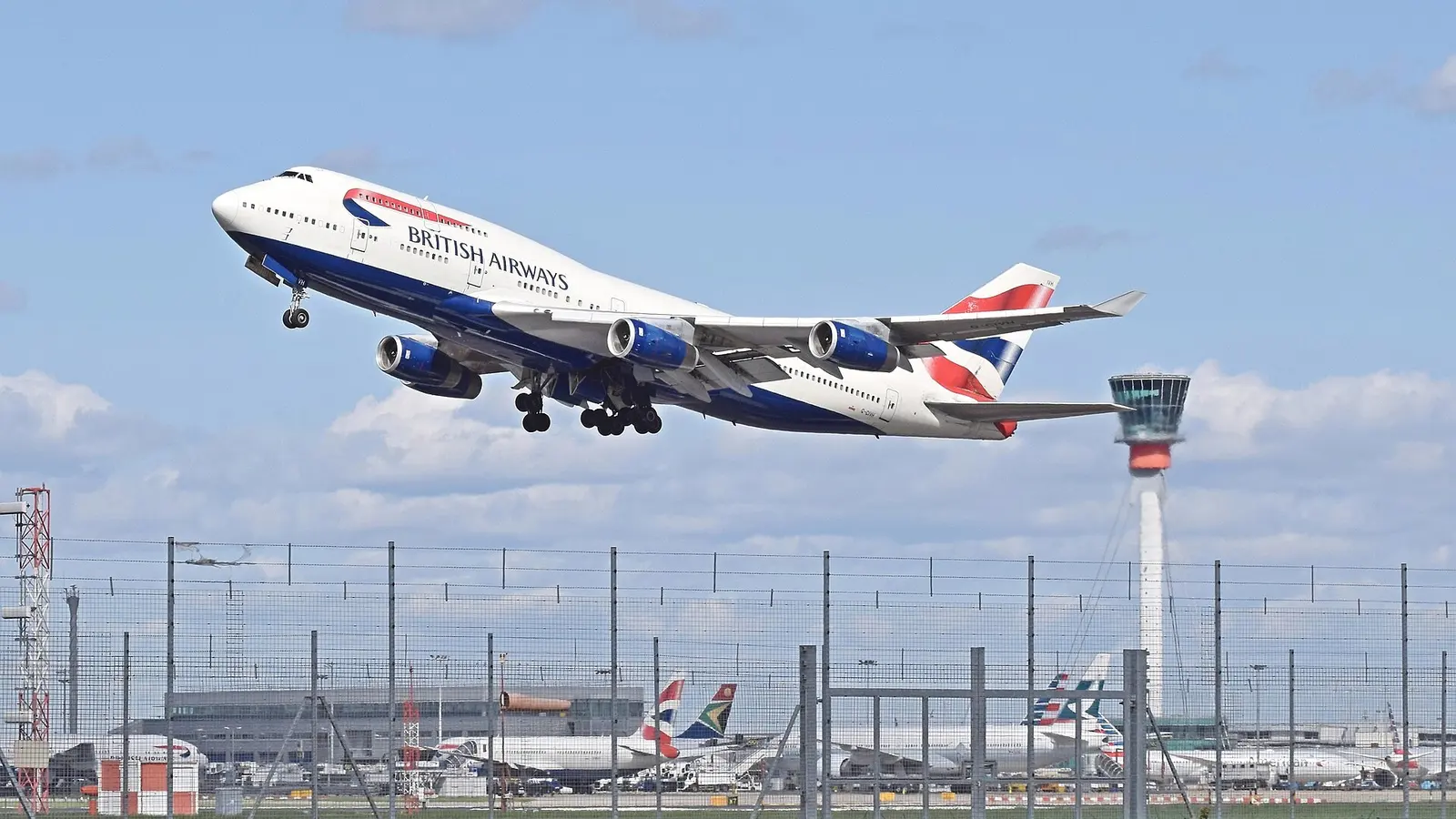
Aircraft landing at Heathrow · Photo via Wikimedia Commons (public domain)
Heathrow to Paddington taxi — the thirteen questions asked with a timetable in hand
How long does a taxi from Heathrow to Paddington take?
The road runs about sixteen miles: 35 to 70 minutes by day depending on the hour, and 25 to 35 in the night hours when the elevated miles empty out. Your booking commits to a pickup or arrival time built for your actual slot rather than a brochure average — and on this short a route, the terminal-exit and district-endgame craft matter as much as the miles between them.
Honestly — should I just take the Heathrow Express?
If you are one or two people with light bags, landing in daytime, staying near the station or connecting onward by rail — yes, take it; it is a superb train and this page says so without flinching. Book the car instead when the multiplication starts: three or more travellers, serious luggage, a hotel-belt or Bayswater doorstep, a landing after the ~00:13 last departure, or a dawn checkout before the 04:12 first one. About a third of this corridor’s travellers fit that second list — the page above helps you find out in ninety seconds which third you are.
How much does the taxi cost against the train?
The train prices per person; we price per vehicle — that single difference decides most bookings. A couple travelling light can keep the rails and their change with our blessing. From three travellers upward — and for any family — one fixed written fare covering the whole party, all luggage and the final doorstep usually beats the stacked tickets before comfort is even weighed. Send party size, terminal and destination to the desk and both sums arrive with the quote; we are relaxed about which one you pick.
I land after midnight — what are my options?
Between roughly 00:13 and 04:12 the nonstop train sleeps, and the alternatives shrink to night buses, surge-priced apps or a pre-booked car that was always going to be there. Ours tracks the flight from origin, waits inside arrivals with your name shown, absorbs delay without charging for it, and runs the empty Westway to your actual door in under half an hour. The night hole is scheduled into our rota precisely because it is scheduled out of everyone else’s.
Do you drop at my hotel’s door, or just “Paddington”?
The door — and in this district that word does real work. Sussex Gardens runs one-way with fussy stopping rules; Lancaster Gate’s houses differ on whether cars come inside the railings; Bayswater’s apart-hotels hide behind unmarked entrances. Your destination’s specifics ride along in the booking, the driver approaches from the correct end, and the journey finishes where your key works — not where a satnav pin gave up.
Which terminals do you cover, and where do you meet us?
All of them — T2 and T3 out of the central area, T4 off the southern perimeter, T5 on its own western campus — with the terminal confirmed against your flight the day before travel. Meet-and-greet is inside the arrivals hall with a name board, waiting time included, and the driver already briefed on your destination’s drop-off quirk. Nobody stands on a kerb at 1am wondering which of four terminals their car believes in.
Can you handle a big family, a pushchair and serious luggage?
That combination is this route’s core clientele. Declare heads, cases and child ages at booking: the vehicle arrives sized accordingly, child seats fitted, boot planned rather than negotiated. One loading at the terminal, one unloading at reception — no lifts, no gaps, no escalator relay with a sleeping toddler. The whole argument for the car on this corridor fits in a single image: everything you own moving in one piece, once.
My flight is delayed — does the booking survive?
It adjusts itself. We follow the aircraft from departure, so the driver’s dispatch shifts while you are still airborne and the included waiting absorbs the arrivals queue at the far end. A two-hour delay moves the car two hours; it does not move the price. The one thing we ask is the flight number at booking — it is the thread the whole self-correcting system hangs from.
Can you take me to Paddington for an onward train instead of a hotel?
Certainly — and with platform-aware craft: set-down positioned for your end of the station, timing built against your rail departure rather than a generic arrival, and the late-evening sleeper connection handled as the specialty it is. For onward journeys we also run direct — sometimes the honest answer is that a car straight to your final destination beats the change entirely; see Paddington to Oxford for one worked example.
Do you do the reverse — Paddington district to Heathrow?
Daily, and dawn is its signature: hotel checkouts at four in the morning for the first long-haul wave, collected from the doorstep while the district sleeps and delivered to the correct terminal’s forecourt with bag-drop margin banked. Book both directions together for one reference and a discounted return — the arrival leg and the checkout leg are two halves of the same trip, and the desk treats them that way.
Is the car really competitive when the train takes fifteen minutes?
Measured platform-to-platform, no — and we have never claimed otherwise. Measured the way travellers actually travel — belt-to-bed, with luggage, as a group, at the hour the flight actually lands — the totals converge and often flip. The train’s fifteen minutes sit inside a longer journey of walks, waits and stairs; our thirty-five sit inside nothing. Doors to door is the only honest race, and it is the one we win for our third of the market.
Why pre-book rather than join the taxi rank?
The rank works — at rank prices, with rank queues, in whatever vehicle surfaces next. Pre-booking buys the things the queue cannot sell: a fare fixed before landing, a vehicle sized to your exact luggage, a name board inside the hall, flight tracking that makes delays irrelevant, and a driver already carrying your hotel’s drop-off quirk. On the night runs especially — when supply thins and surge maths bites — the difference between summoned and guaranteed is the whole night.
How far ahead should I book?
The day your flight confirms is ideal — night-hole slots and family-sized vehicles are the scarcest stock, and a fixed fare makes early commitment cost nothing. The evening before travel you receive the ritual that makes the morning boring in the best way: driver named, vehicle described, minute confirmed, destination quirks loaded. Last-minute requests are answered honestly around live availability — but the 2am arrivals who sleep soundest booked the car the same day they booked the seat.
Making the Most of Your Journey: Stops & Sightseeing
Eat & shop like a Londoner: fish & chips, roast, afternoon tea, pies, ale, vegan, British brands – with prices (tap to open)
Eat and shop like a Londoner: fish & chips, Sunday roast, full English, afternoon tea, pies, pale ale, vegan & the best British brands
Our drivers get asked for these every day, so here is the shortlist we give in the car. Prices are from the venues’ own menus and booking sites (seen October 2026); tap the Google Maps link for photos, today’s menu and star ratings. Want a stop on the way? Say so when you book and the driver will wait.
Fish & chips
Poppies Fish & Chips Spitalfields E1, Soho W1, Camden NW1, Portobello W11 1950s East End chippy, haddock and cod fried to order, mushy peas cod & chips £21.99, haddock £20.99 (menu) website · photos, menu & ratings on Google Maps
Golden Union Poland St, Soho W1 Proper chippy with a sit-down room, gluten-free batter on request about £15–£19 for fish and chips website · photos, menu & ratings on Google Maps
Sunday roast
Hawksmoor Seven Dials WC2, Borough SE1, Air Street W1, Wood Wharf E14, Knightsbridge The roast most Londoners name first: dry-aged rump, beef-dripping roast potatoes, Yorkshire pudding Sunday roast rump £29.50 (menu); book ahead website · photos, menu & ratings on Google Maps
Blacklock Soho W1, Shoreditch EC2, Covent Garden WC2, Canary Wharf E14 Chop-house roasts with all the trimmings and bottomless gravy roast about £24–£28 (menu) website · photos, menu & ratings on Google Maps
English breakfast
E Pellicci 332 Bethnal Green Rd E2 Family caff since 1900, Art Deco interior, fry-ups and Italian specials; cash-friendly, Mon–Sat mornings full English about £10–£13 website · photos, menu & ratings on Google Maps
The Wolseley 160 Piccadilly W1 Grand café breakfast under chandeliers: the full English, kedgeree, eggs Benedict full English about £20–£24 (menu) website · photos, menu & ratings on Google Maps
Afternoon tea
The Ritz, Palm Court 150 Piccadilly W1 The classic: finger sandwiches, scones, pastries and a pianist; jacket and tie for men, book weeks ahead £85 a head, £105 with Champagne (2026); 12.5% service added website · photos, menu & ratings on Google Maps
Fortnum & Mason, Diamond Jubilee Tea Salon 181 Piccadilly W1 Fortnum’s own teas, a trolley of cakes and the famous scones from £75 a head (2026) website · photos, menu & ratings on Google Maps
Pies
Mother Mash Carnaby St, Soho W1 Pie, mash and gravy or sausage and mash, choose your mash and your gravy pie, mash & gravy from about £15 website · photos, menu & ratings on Google Maps
Pieminister Leather Lane EC1 and across London Award-winning British pies incl. vegan and veggie; takeaway or sit in pie & mash about £12–£15 website · photos, menu & ratings on Google Maps
British pale ale
The Churchill Arms Kensington Church St W8 Flower-covered Fuller’s pub, London Pride on cask, Thai kitchen at the back pint about £6–£7 website · photos, menu & ratings on Google Maps
Ye Olde Cheshire Cheese Fleet St EC4 Rebuilt 1667, Dickens drank here; Samuel Smith’s ales, cellar bars pint about £5–£6 (no cards in some Sam Smith’s pubs – carry cash) website · photos, menu & ratings on Google Maps
Vegan & vegetarian
Mildreds Lexington St, Soho W1 (also Camden, King’s Cross, Dalston, Covent Garden) London’s best-known vegetarian restaurant since 1988, now fully plant-based about £38 a head (TheFork); mains £15–£20 rated 9.3/10 on TheFork, 2,800+ Tripadvisor reviews website · photos, menu & ratings on Google Maps
Fortnum & Mason 181 Piccadilly W1 Tea, biscuits, marmalade and hampers in the famous eau-de-nil tins since 1707 tea caddies from about £10; hampers £50+ website · photos, menu & ratings on Google Maps
Liberty London Regent St W1 Tudor-fronted store for Liberty print scarves, Barbour, Burberry, Mulberry and British designers scarves from about £45 website · photos, menu & ratings on Google Maps
Tipping: 10–12.5% service is often added in restaurants, never in pubs or chippies. Most places take cards; a few old caffs and Sam Smith’s pubs are cash-only. Vegan and gluten-free options are marked on almost every London menu – just ask. The airport shops sell the same tea tins and biscuits at 2–3 times the supermarket price, so buy souvenirs in town.
LHR ⇆ PAD · The Honest Split · The Night Hole · The Door
The Express ends at a platform. Journeys end at doors.
One fare for the whole party, the district’s doorsteps mastered, the four dark hours covered nightly — and a comparison page honest enough to send the other two-thirds to the train with our compliments.