Get London Transfer Ltd is a TfL licensed private hire operator - London private hire operator licence number 11588. getlondontransfer.co.uk and rushxo.com are trading names of Get London Transfer Ltd, and rushxo.co.uk is the UK site of rushxo.com. Every booking made on these websites is operated by Get London Transfer Ltd.
★★★★★ Rated five stars by real passengers on Google — and used most on the days the northbound timetable is unforgiving.
Oxford has no train to Euston, and it is not a timetable quirk — it is geography. Oxford sits on the Great Western line to Paddington and the Chiltern line to Marylebone. Euston belongs to the West Coast Main Line, a completely separate network Oxford does not touch. So every rail journey means arriving at one London terminus and travelling across the city to another. The East West Rail link toward Milton Keynes, which would eventually give Oxford a route onto the West Coast network, still had no confirmed opening date as of mid-2026. A car covers the 60 miles in 1h15 to 2h and stops once.
The only two cities on this list that share no railway at all — which is why the road is the whole answer.
The Network Map, Not the Timetable
Why is there no train from Oxford to Euston?
Most "no direct train" routes are a scheduling problem. This one is structural. Oxford is served by two operators running into two different London termini, and neither of them is Euston — because Euston belongs to a third railway that never reaches Oxfordshire.
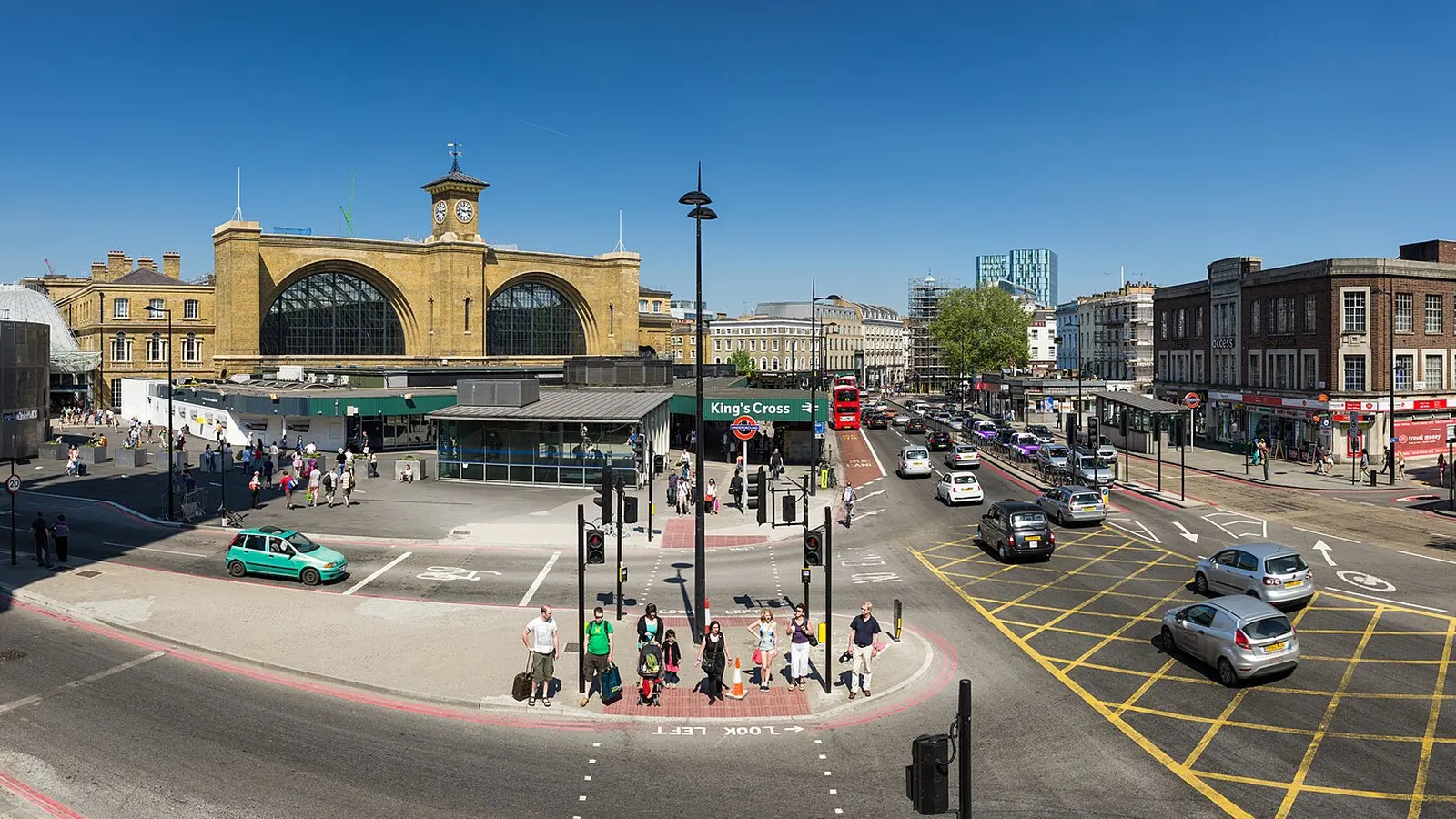
Euston station · Photo: Colin, CC BY-SA 3.0 via Wikimedia Commons
How Oxford connects to London by rail, and why Euston is missing
Line from Oxford
Operator
London terminus
Reaches Euston?
Great Western Main Line
GWR
Paddington
No — different network entirely
Chiltern Main Line
Chiltern Railways
Marylebone
No — separate approach into London
West Coast Main Line
Avanti and others
Euston
Does not serve Oxford at any point
East West Rail (Bicester–Bletchley)
Under construction
—
Would link Oxford toward the West Coast — still no opening date confirmed as of mid-2026
↔ Swipe the table sideways on mobile
What that means in practice: your rail journey to Euston is really two journeys. You arrive at Paddington or Marylebone, then cross central London by Tube, bus or taxi with whatever you are carrying, then start again. The published "Oxford to London" time on any journey planner is the first half only.
The Real Reason People Book This
Almost nobody's destination is Euston itself
Euston is a doorway to the North West and Scotland. The passengers we carry on this corridor are overwhelmingly heading somewhere beyond it, on a ticket that was bought in advance and will not be honoured if they miss the departure.
Where Euston passengers from Oxford are usually heading
Onward service
Rough time from Euston
Why the Oxford leg matters
Birmingham New Street
~1h20
Frequent enough to absorb a slip — the one forgiving option on this list
Manchester Piccadilly
~2h
Advance fares dominate; walk-up prices on the day are a different order
Liverpool Lime Street
~2h10
Hourly rather than half-hourly, so a missed train costs an hour minimum
Preston and the Lake District
~2h20+
Onward local connections tighten as you go north
Glasgow Central
~4h30
A handful of services a day — missing one can end the travel day
↔ Swipe the table sideways on mobile
Give the desk the northbound departure, not the pickup time. We build the collection backwards from the train you have to be on, allowing for the M40 at that hour rather than an average. If the margin is genuinely too thin, you will be told that before you book rather than discovered at the barrier.
The Road Itself
Sixty miles that behave very differently by the hour
The line is straightforward — out to junction 8 of the M40, down the motorway, onto the A40 and into the Euston Road corridor. What changes is how much of it is moving.
SEGMENT / 01
Oxford to M40 J8
The eastern ring road and the Headington approach carry Oxford's own commute plus hospital traffic. Leaving the city is frequently the slowest few miles of the entire journey, and it is the part a mapping app underestimates most.
SEGMENT / 02
The motorway run
Genuinely quick when clear, and the reason this route can be done in seventy-five minutes at the right hour. It also has no useful parallel: an incident here has no quick escape, which is why departure timing beats route cleverness on this corridor.
SEGMENT / 03
The A40 into town
Where the journey stops being a motorway drive and becomes a London one. The stretch through Western Avenue and down toward the Marylebone Road corridor decides which end of our quoted range you land on.
The pattern worth knowing: this route rewards leaving early far more than it rewards leaving fast. A 07:00 departure and an 08:15 departure are not fifteen minutes apart at the other end — they can be forty. Overnight and Sunday-morning runs sit at the bottom of the range comfortably.
Who Books This Corridor
Three passengers we carry to Euston every week
RUN / A
The northbound academic
Conference in Manchester, seminar in Glasgow, external examining in Liverpool. Travelling with a laptop, a printed talk and often a poster tube that no Tube escalator was designed to accommodate.
RUN / B
The relocating student
End of term, a room's worth of boxes, and a family home somewhere off the West Coast line. The cross-London leg is the single point where this journey usually falls apart, and it is the one a car removes entirely.
RUN / C
The business day-return
Out on an early Avanti service, back the same evening, with the Oxford end of the trip needing to work at both six in the morning and eleven at night. Neither of those hours is well served by a two-stage rail journey.
Oxford to Euston — the questions people actually ask
Is there a direct train from Oxford to Euston?
No, and there never has been. Oxford sits on the Great Western line into Paddington and the Chiltern line into Marylebone. Euston is the terminus of the West Coast Main Line, a separate railway that does not serve Oxford at any point. Every rail journey between the two therefore means arriving at one London terminus and crossing the city to another. The East West Rail scheme would eventually connect Oxford toward the West Coast network via Milton Keynes, but it still had no confirmed opening date as of mid-2026.
How far is Oxford from Euston, and how long does the drive take?
About 60 miles by road, and typically 1 hour 15 to 2 hours. The line runs out to junction 8 of the M40, down the motorway, then onto the A40 and into the Euston Road corridor. The spread is wide because the two ends behave differently from the middle: leaving Oxford through the eastern ring road and arriving through west London are both far more variable than the motorway between them.
What is the fastest way to get from Oxford to Euston by public transport?
Usually the Chiltern service into Marylebone, then the Bakerloo line to Baker Street and the Circle or Hammersmith & City line across — or a short taxi. Going via Paddington on GWR is quicker on the rail leg but leaves you further from Euston. Either way you are looking at a train, a change and a cross-city hop, and the total depends entirely on how well the connections line up on the day.
I have a booked Avanti train from Euston — how much margin should I leave?
Tell us the northbound departure and we plan backwards from it. As a working rule, leaving a clear hour between arriving at Euston and your train is comfortable, and thirty minutes is tight once you factor in finding the right platform in a station that is partly a building site. If your onward service runs hourly rather than half-hourly — Liverpool, Glasgow — we would push that margin wider still.
Can you collect from a college, a lab or a village outside Oxford?
Yes. Porters' lodges, the science area, the business park sites off the ring road, and the villages out toward Woodstock, Abingdon and Kidlington are all ordinary pickups for this route. Give the desk the postcode and any access notes when you book — several Oxford colleges have restricted vehicle access, and knowing that in advance is the difference between a kerbside meet and a confused phone call.
Do you carry luggage that would not survive a Tube change?
That is much of the point. Boxes, instrument cases, poster tubes, a term's belongings and anything on wheels that will not fold all travel in the boot from Oxford to the Euston kerb without being lifted once. Tell the desk the volume honestly when booking and the vehicle is sized to it rather than guessed at.
What does it cost?
One all-inclusive figure quoted in writing before you travel — no meter, no surge, no separate charge for waiting or luggage. Send your pickup postcode, passenger count and onward train time to WhatsApp dispatch, call the desk or use the booking page.
Do you run the return, Euston back to Oxford?
Daily, on its own page: Euston to Oxford taxi. Book both directions together and it becomes a single reference with one point of contact.
OXF → EUS · The Gap in the Network
No railway joins them. One road does.
Sixty miles of M40, one vehicle, and a drop at whichever Euston entrance is working the day you travel — timed around the northbound train you actually need to catch.