Get London Transfer Ltd is a TfL licensed private hire operator - London private hire operator licence number 11588. getlondontransfer.co.uk and rushxo.com are trading names of Get London Transfer Ltd, and rushxo.co.uk is the UK site of rushxo.com. Every booking made on these websites is operated by Get London Transfer Ltd.
London Stadium · Queen Elizabeth Olympic Park · E20 · Fixed Fare
London Stadium taxi — for the ground no car can reach, served by people who've mastered its edges.
Start with the truth every other taxi page buries: no vehicle ever reaches London Stadium. Not ours, not a black cab, not a chauffeured anything — West Ham's home is a green stadium inside a park, with no public parking and no drive-up gate, and everyone walks the final stretch across one of the park's numbered bridges. So the service worth buying isn't a fantasy drop at the turnstiles; it's mastery of the edges: which bridge suits your approach, which park boundary your car should aim for, where the event-day closures bite, and — the part that saves your evening — a pickup point and time fixed before you go in, while sixty-two thousand people plan to improvise theirs at Stratford. Add the quiet bonus nobody mentions: London City Airport is barely six miles away, the shortest stadium-airport pairing in Britain. Claret-and-blue matchdays, summer concerts, baseball weekends and athletics — one desk, one sealed fare, on 020 8888 9988 around the clock.
A stadium you walk into and out of — won or lost at its edges, which is exactly where we work.
The Five Bridges · The Only Map That Matters Here
Every way into London Stadium crosses a numbered bridge — pick yours, and we'll drop for it
The park's geography is beautifully simple once decoded: five bridges feed the stadium, each pairing with a station and a park edge. Your best bridge depends on where you're coming from — and our drop targets the boundary nearest it.
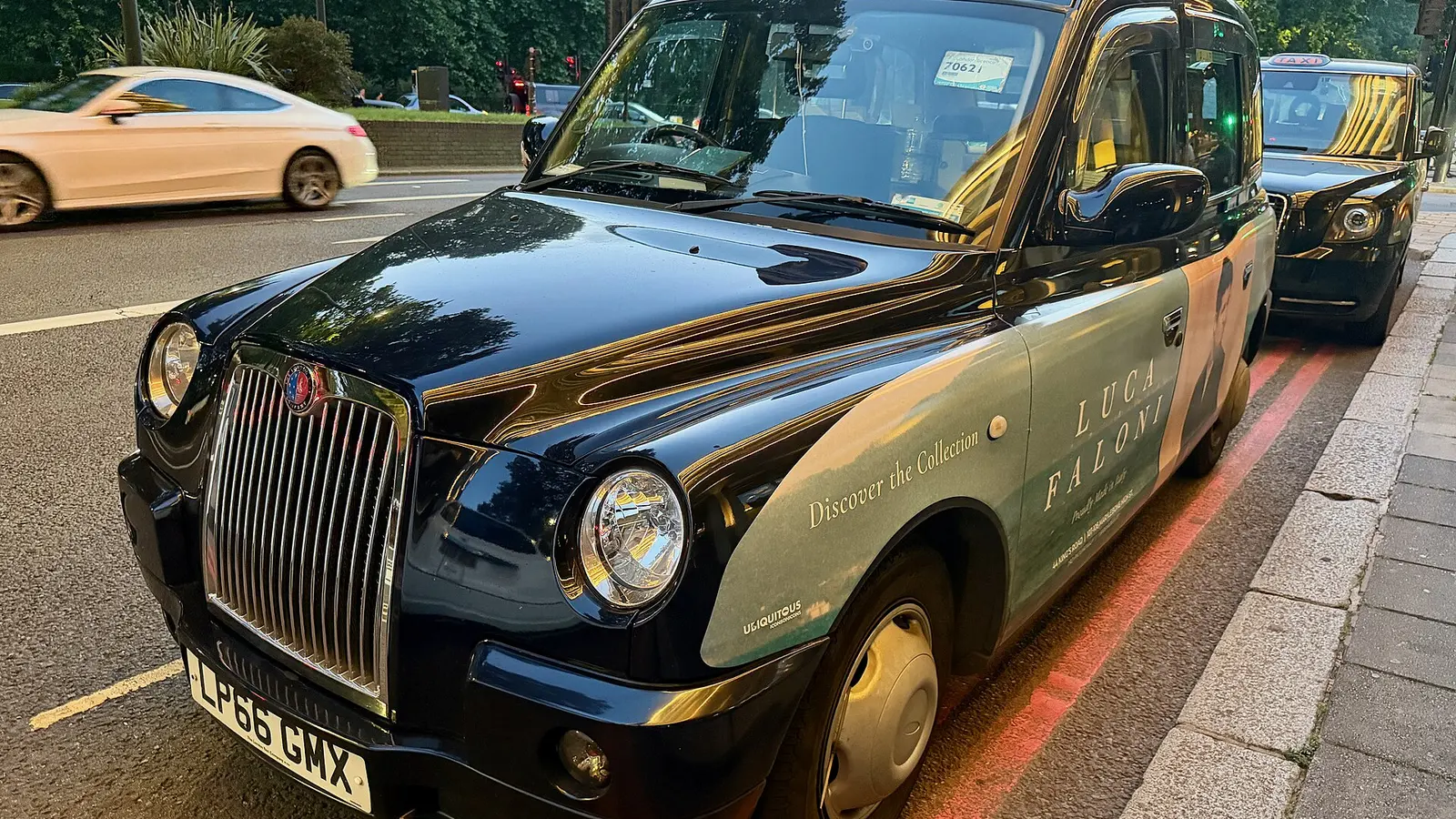
London taxi · Photo: Oleg Yunakov, CC BY-SA 4.0 via Wikimedia Commons
The bridge
Its landmark & station
The walk
Who it suits
Bridges 1 & 2
By the Aquatics Centre — Stratford International side
~20 minutes
High-speed rail arrivals and the Westfield flank — our eastern-edge drops feed these when the closures allow
Bridge 3
By the Marathon Community Track — Hackney Wick side
~10–20 minutes over the canal
Western approaches and canal-side arrivals — the quieter flank when Stratford is heaving
Bridge 4
Also by the Community Track — Pudding Mill Lane side
~10 minutes — the shortest
The connoisseur's route: southern drops off the A12 corridor put you closest of all, and it's our default recommendation for most car arrivals
Bridge 5
By the ArcelorMittal Orbit — Stratford High Street side
~20 minutes
South-eastern approaches along the High Street — a reliable fallback with its own edge access
How we use this map: your booking carries an edge, not a fantasy — the driver aims for the park boundary matched to your best bridge and your direction of travel, adjusted for the day's closure pattern, and your confirmation tells you the bridge, the landmark and the honest walking minutes. Arriving early on a non-event day for the stadium tour or the store? The edges relax and the walk shortens — same craft, gentler day.
Stratford, Credited in Full · Then the Two Traps
Britain's best-connected stadium by rail — we'll say it louder than the train companies do
Our honesty rule applies at full volume here, because Stratford's connectivity is genuinely exceptional: around 58 trains an hour across the Elizabeth, Central and Jubilee lines, the DLR, the Overground and national rail, with lifts and escalators that make it one of the most practical big stations in the country. A solo fan from central London should take the train and we'll hold the door. Now the two traps and the four cases:
The two traps in the rail plan
The name trap: "West Ham" station is not the stadium's station — the club itself steers matchday supporters away from it toward Stratford and the park stations. Every season, visitors alight at the name and discover the geography; now you won't.
The exit crush: what 58 trains an hour giveth, 62,500 people leaving at once taketh away — the post-event funnel into Stratford is the single hardest part of any London Stadium evening, and the official return rank runs from a temporary pitch at exactly peak demand.
The four cases for the booked car
The group: one sealed fare against a fistful of per-head tickets — the arithmetic flips at three, and the party travels as one.
The flight either side: luggage has no place in a matchday crowd; airport-to-edge and edge-to-airport runs carry it properly, timed to your actual flight.
The late finish: concert encores and midweek whistles land as the network thins — the pre-booked car neither thins nor surges.
The exit itself: a reunion point fixed before you went in, placed against the crowd's grain, beats an hour in the funnel every single time.
The Airport Board · East London's Quiet Advantage
Six airports from the Olympic Park — with the shortest stadium-airport run in Britain
This ground sits on London's eastern flank, and the airport maths rewards it handsomely — in the opposite pattern to the west-London stadiums. The board, with honest verdicts:
Airport
The run
Verdict for this ground
London City (LCY)
~6 road miles · 15–25 min
The headline pairing: a stadium and an airport practically neighbours — fly City and the whole "getting there" question dissolves. Detail on the City Airport hub
Stansted (STN)
~28 miles · 35–50 min — the M11 picks up from the A12 by the park
The natural second: European carriers in numbers and a corridor that starts on the stadium's doorstep — see the Stansted hub
Southend (SEN)
~35 miles east · 45–65 min
The sleeper option: when the cheap flight lives there, the eastbound run is painless from E20
Heathrow (LHR)
~22–25 miles · 60–90 min across the capital (public transport ~1h40)
The long crossing — long-haul visitors land here regardless, and the fixed-fare car absorbing the width of London is precisely its job: Heathrow hub
Luton (LTN)
~32 miles · 55–80 min
Workable on the northern arc — the road beats the rail zigzag for groups and bags: Luton hub
Gatwick (LGW)
~32–38 miles · 60–95 min
The southern diagonal — honest padding required and the fare fixed either way: Gatwick hub
The trip-planner's line: if your route offers London City, take it and gloat — six miles is a shorter airport run than some grounds' station walks. If it offers Stansted, you're still laughing. Everything else, the car makes civilised — met with a name board, sized to the party, priced before you flew.
The Stadium's Four Seasons · Every Event Type, Planned For
Claret-and-blue Saturdays to baseball weekends — how each event day is served
EVENT / A
West Ham matchdays
The bread and butter: park-edge drops matched to your bridge, arrival timed before the closure pattern hardens, and the post-match reunion fixed pre-kick-off at a point the crowd's tide doesn't wash over. Away fans flying in get the full airport-to-edge treatment with the fixture already on the desk's screen.
EVENT / B
The summer concert season
Stadium-scale shows with later finishes and less local knowledge in the crowd — the pre-agreed pickup earns its keep hardest here, positioned as the encore ends while the network's evening thins and app pricing celebrates. Book with the artist and date; we'll already know the curfew pattern.
EVENT / C
Baseball & the big one-offs
MLB's London weekends and marquee events fill the park with international visitors carrying luggage, jet lag and zero Stratford experience — split itineraries (airport, hotel, ballpark, airport) sequenced as one plan through one desk, group vehicles sized upfront.
EVENT / D
Athletics, tours & the quiet days
Meet days, stadium tours and store visits run on the park's gentler rhythm — closer edges, shorter walks, and straightforward door-to-park runs from anywhere in London at the same fixed-fare discipline. The Orbit and Aquatics Centre next door slot into the same booking as extra stops.
Comfortable saloon car parked on a city street
Real Problems · Real Fixes
Where London Stadium journeys go wrong — and the engineering against each
This park's failure patterns are structural, so the fixes are too. Each is built into the booking before your day begins.
RISK / 01
The drive-up fantasy
The problem: visitors book transport "to the stadium" not knowing no vehicle reaches it — then meet the park's reality mid-journey with kick-off approaching. Our fix: the truth is the product: your confirmation names the edge, the bridge and the walking minutes, so the plan was real from the moment you booked.
RISK / 02
The name-trap alight
The problem: "West Ham" station sounds like the obvious stop and isn't — a discovery made on the wrong platform with the clock running. Our fix: door-to-edge means no station roulette at all; and if you're mixing modes, the desk will happily tell you which stations actually serve the park.
RISK / 03
The Stratford exit funnel
The problem: the best-connected station in Britain becomes its most congested the moment 62,500 people leave together — and the temporary return rank meets peak demand with a queue. Our fix: your reunion point and time were fixed before the event, set against the crowd's grain; you walk minutes while the funnel discovers itself.
RISK / 04
The closure-pattern surprise
The problem: event-day road closures around the park reroute approaches without warning drivers who don't work here weekly. Our fix: the A12-side and Stratford-side patterns are our home terrain — approaches chosen for the day's actual restrictions, not last month's memory.
RISK / 05
The concert-night thinning
The problem: encores end near midnight as the network winds down and surge pricing winds up — the worst hour to be improvising in E20. Our fix: the fare was sealed at booking and the car positioned before the last song; Wednesday midnight costs what Monday afternoon quoted.
RISK / 06
The flight-day gamble
The problem: international visitors thread a match or show between flights and improvise the connections — luggage through crowds, timings guessed. Our fix: airport, hotel, park edge and return sequenced as one plan — City's six miles or Heathrow's crossing, each leg fixed, tracked and held by one desk on 020 8888 9988.
Straight Answers
London Stadium taxis — the honest answers fans actually need
How close can a taxi actually get to London Stadium?
To the park's edge — and that's every vehicle, every day, because this is a green stadium inside Queen Elizabeth Olympic Park with no public parking and no drive-up access whatsoever. The final stretch is always a walk across one of the five numbered bridges, from about ten minutes on the Pudding Mill Lane side to about twenty from the Stratford flanks. What separates a good drop from a bad one is which edge the car aims for: ours is chosen by your approach direction, your best bridge and the day's closure pattern, and your confirmation states the landmark and the honest walking minutes before you travel.
Is West Ham station the right stop for the stadium?
No — and this catches out visitors every single season. The station carrying the club's name is not the stadium's station, and the club itself directs matchday crowds toward Stratford and the park stations instead. The genuinely useful stops are Pudding Mill Lane on the DLR (closest, around ten minutes' walk), Stratford (the giant hub, fifteen to twenty minutes), and Stratford International, Hackney Wick and Stratford High Street around the park's other flanks. Or skip the station question entirely: a door-to-edge car makes the whole puzzle someone else's job — ours.
What's the best airport for a London Stadium trip?
London City, and it isn't close: around six road miles, fifteen to twenty-five minutes door to edge — the shortest stadium-airport pairing in Britain, sitting right on this ground's side of the city. Stansted is the strong second, its M11 corridor starting from the A12 by the park — about 28 miles in 35 to 50 minutes — and it carries the European network away fans actually fly. Heathrow's long-haul visitors face the full crossing at 60 to 90 minutes by car (public transport runs roughly an hour and forty), which is exactly the journey a fixed-fare transfer exists to absorb. All six airports are compared in the table above, each linked to its full hub guide.
How does the post-event pickup actually work?
It's agreed before you go in — that's the entire trick. Your booking fixes a reunion point on the park's edge and a time, both chosen against the crowd's direction and outside the closure pattern's worst, and the driver's exact position is messaged as the event ends. While tens of thousands funnel toward Stratford's platforms and the temporary rank's queue, your party walks a few known minutes the other way to a car that's lawfully waiting. Groups travel whole in MPVs and 8/9-seaters, and nobody's evening depends on phone signal in a crowd of sixty thousand.
Do you cover concerts, baseball and non-matchday visits too?
All of it — the stadium's calendar is our calendar. Summer concert nights get the pre-positioned pickup as the encore lands; MLB weekends and marquee events get full itinerary sequencing for international visitors (airport, hotel, park, return — one desk, one set of sealed fares); and quiet-day tours, store visits and athletics run on the park's gentler rhythm with closer edges and shorter walks. Tell the desk the date and event when you book — the closure pattern and finish-time habits are part of what you're paying us to already know.
How does pricing work for stadium journeys?
You get one settled number before committing — the vehicle matched to your declared party and luggage, with airport fees and zone charges already folded in. Thirty percent down seals it; the rest is paid on travel day. Event diversions never feed a meter and the final whistle never triggers a surge, because the price predates both. Two printed adjustments are the entire rulebook — weekend peaks add a tenth, and qualifying late-night London journeys take £11.55 off — and each appears on screen before anything is confirmed. The full pricing anatomy is on our fixed price guide, and the whole network lives on the London transfer flagship.
E20 · Masters of the Edges
No car reaches this stadium. The right car makes that irrelevant.
Bridge-matched drops, the station trap decoded, City Airport six miles away, and a reunion fixed before the crowd exists — London Stadium journeys run by people who treat the park as home ground.
Buy from the box office first:London Stadium (West Ham) – the venue’s own site or its named ticket partner (Ticketmaster, AXS, See Tickets, Dice or Eventim) is the only place the price is the real price and the ticket is guaranteed.
Cheaper, fair-price options:
club membership ballots and the club’s own ticket exchange are the only legal resale routes for football in England – unofficial resale of football tickets is a criminal offence, so ignore the tout sites
Cup ties, women’s fixtures and midweek league games are usually £15–£35 and far easier to get
Citizens Advice: your rights when buying tickets – pay by card, never bank transfer, and check the seller is an official partner before paying more than face value
Tickets sorted? Our fixed fare covers the car, not per person, and the driver waits where the venue lets us after the show – so a group of four usually pays less than the train plus a late-night surge-priced app ride.